Posted by Watch Warehouse on Jul 8, 2026
Automatic vs Quartz vs Manual: A Guide to Watch Movements
If you've ever turned a watch over and wondered what actually makes the hands move, you're asking one of the most fundamental questions in horology. It might seem like a technical detail best left to watchmakers, but the type of movement inside a watch shapes almost everything about how you'll live with it—how often you interact with it, how much maintenance it needs, how accurate it stays, and even how it makes you feel when you glance at your wrist. Understanding the differences between automatic, quartz, and manual movements is the single most useful thing you can learn before buying a watch.
The good news is that none of this is as complicated as it first appears. Once you understand the basic principles behind each of the three main watch movement types, you'll be able to walk into any conversation—or any watch showroom—with genuine confidence. Let's take a thoughtful look at how each one works and, more importantly, what it means for you as an owner.
What Exactly Is a Watch Movement?
The movement, sometimes called the "caliber," is the engine of a watch. It's the internal mechanism responsible for tracking the passage of time and driving the hands (or digital display) accordingly. Everything else—the case, the dial, the crystal, the strap—exists to protect and present this beating heart. When enthusiasts talk about a watch's soul, they're usually talking about its movement.
Broadly speaking, movements fall into two camps: mechanical and quartz. Mechanical movements are powered by a wound spring and a network of gears, springs, and jewels. Quartz movements are powered by a battery and regulated by a tiny vibrating crystal. Within the mechanical family, there's a further split between manual-wind and automatic (self-winding) movements. That gives us the three categories most people care about: automatic, quartz, and manual.
The Manual Movement: Horology in Its Purest Form
The manual-wind movement is the oldest of the three and, in many ways, the most romantic. To power it, you turn the crown by hand, which tightens the mainspring—a coiled ribbon of metal that stores energy. As the spring slowly unwinds, it releases that energy in tightly controlled increments through a component called the escapement, which is what produces that satisfying tick you can sometimes hear.
The appeal of a manual watch is the ritual. Winding it each morning creates a small daily connection between you and the object on your wrist. There's no battery, no rotor swinging around inside—just gears, springs, and craftsmanship you can often admire through a transparent caseback. The tradeoff is that manual watches typically require winding every day or two, and forgetting means your watch stops and needs resetting. For many enthusiasts, though, that's part of the charm rather than a burden.
Manual movements also tend to be thinner than automatics because they lack the winding rotor, which is why they're favored in elegant dress watches. If you love the idea of a mechanical timepiece and don't mind the daily ritual, a manual watch offers one of the most intimate experiences in all of watch collecting.
The Automatic Movement: Mechanical Convenience
An automatic—or self-winding—watch is a mechanical watch that solves the daily winding chore in an ingenious way. Inside sits a semicircular weight called a rotor, which spins freely as your wrist moves throughout the day. That motion winds the mainspring automatically, so as long as you wear the watch regularly, it stays powered without any effort on your part. This is mechanical watch explained in its most practical modern form.
Automatics are enormously popular because they combine the craftsmanship and heritage of mechanical watchmaking with everyday livability. Most modern automatics also allow manual winding through the crown, which is handy when the watch has been sitting unworn. The "power reserve"—how long the watch runs when not being worn—varies by caliber, and it's an area where the technology has advanced significantly in recent years.
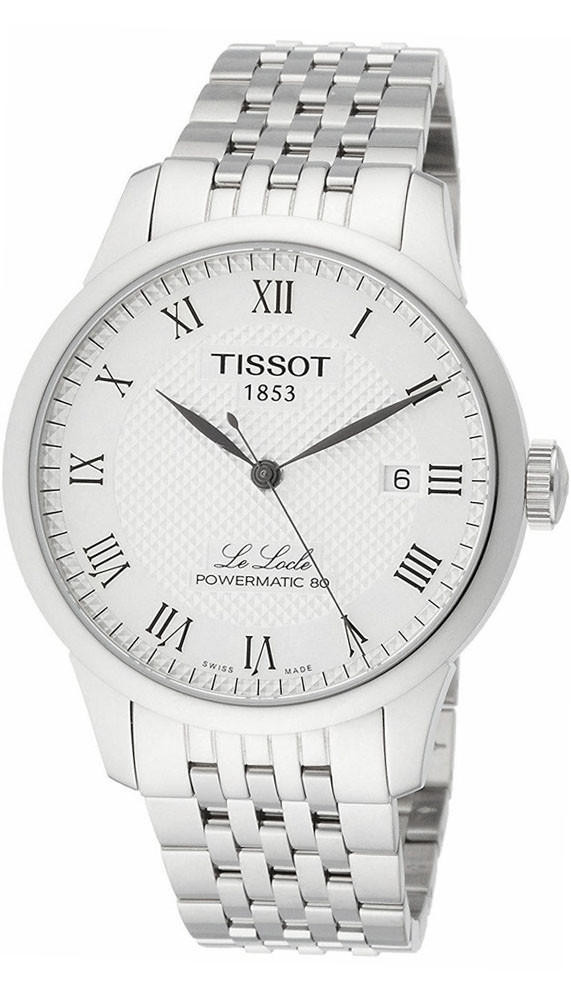
A wonderful example of that progress is the Tissot Le Locle Powermatic 80, which uses a movement offering an impressive 80 hours of power reserve. That means you can take it off on Friday evening and it will still be ticking and accurate when you pick it up Monday morning. Its classic silver dial and 39mm stainless steel case make it a versatile, refined choice that punches well above its price point.
It's worth being honest about the tradeoffs, though. Automatic watches are less accurate than quartz, typically running within a few seconds per day rather than a few seconds per month. They're also more sensitive to shocks and magnetism, and they require periodic servicing every several years to keep the lubricants fresh and the mechanism running smoothly. For those who value the artistry of mechanical watchmaking, these are small prices to pay.
The Quartz Movement: Precision and Practicality
Quartz movements arrived in the late 1960s and changed the industry forever. Rather than relying on a mainspring, a quartz watch uses a battery to send electricity through a tiny quartz crystal cut into a specific shape. That crystal vibrates at a remarkably consistent frequency—32,768 times per second—and the movement counts those vibrations to keep time with extraordinary accuracy.
The practical benefits are hard to overstate. A quartz watch typically stays accurate to within about 15 seconds per month, requires no winding, and keeps running whether you wear it daily or leave it in a drawer for weeks. Battery changes come every couple of years, and there's far less internal maintenance to worry about. For a reliable, grab-and-go timepiece, quartz is genuinely excellent. When people debate automatic vs quartz, this reliability is the quartz camp's strongest argument.
Quartz is also frequently found in serious sports and tool watches, where the movement's resistance to shock and its unwavering accuracy are real advantages. The TAG Heuer Formula-1, for instance, pairs a robust quartz movement with a rugged 41mm stainless steel case and a bold black dial—a combination built for active lifestyles where precision and durability matter more than the romance of gears.

TAG Heuer Watches
TAG HEUER Formula-1 41MM Quartz SS Black Dial Men's Watch WAZ111A.BA0875
There's a common misconception that quartz is inherently "lesser" than mechanical, but that's an oversimplification. Quartz simply prioritizes different values. It won't give you a spinning rotor to admire or a hand-winding ritual, and the seconds hand ticks once per second rather than sweeping smoothly. But if you want something that just works, quietly and precisely, without demanding attention, quartz is a thoroughly rational choice.
How to Choose the Right Movement for You
Rather than asking which movement is "best," the more useful question is which one suits your life and your relationship with watches. If you're drawn to craftsmanship, heritage, and the idea of a small mechanical universe on your wrist, a mechanical watch—whether manual or automatic—will speak to you. Automatics offer the easiest entry point because they wind themselves as you wear them, while manuals reward those who enjoy a daily ritual and appreciate slimmer profiles.
If your priorities are accuracy, low maintenance, and grab-and-go convenience, quartz makes tremendous sense, particularly for a watch you'll wear intermittently or subject to hard use. Many seasoned collectors happily own both, reaching for a mechanical piece on special occasions and a quartz tool watch when they need dependability without fuss.
Style and identity matter too, and this is where a watch becomes personal. A piece like the Gucci Dive, with its 45mm case, matte black dial, and rotating bezel, shows how movement type is just one ingredient in the larger recipe of design, presence, and character. The right watch is one that fits the way you actually live—and the way you want to feel when you wear it.

Gucci watches
GUCCI Dive 45MM SS BLK Matte Dial Rotating Bezel Men's Watch YA136208A
A Few Practical Considerations Before You Buy
Beyond the movement itself, keep a couple of ownership realities in mind. Mechanical watches, both manual and automatic, will need servicing every four to six years or so, and that service isn't inexpensive—something worth factoring into the total cost of ownership. Quartz watches need occasional battery changes, which are far cheaper, though a high-end quartz movement can still benefit from professional attention over the long term.
Consider also how often you'll wear the watch. If you rotate through several pieces, an automatic may sit and stop between wears, requiring resetting each time you return to it—or a watch winder to keep it running. A quartz piece sidesteps that entirely. There's no wrong answer here; it's simply about matching the watch to your habits.
The Bottom Line
Automatic, quartz, and manual movements each represent a different philosophy of timekeeping. Manual watches celebrate tradition and ritual, automatics blend mechanical soul with everyday ease, and quartz delivers precision and reliability with minimal fuss. Understanding these differences transforms watch buying from a guessing game into a thoughtful, informed decision.
Whichever direction appeals to you, the best next step is to handle a few examples in person and see how they feel on your wrist. The knowledgeable team at Watch Warehouse has spent more than 25 years helping people find timepieces that fit both their lifestyle and their taste, and they're always happy to talk through the tradeoffs without any pressure. A watch, after all, is meant to be enjoyed for years—so it's worth taking the time to understand exactly what's ticking inside.
Featured Watches to Consider
Here are some examples from the Watch Warehouse collection that illustrate the points discussed above:
Gucci watches
GUCCI Dive 45MM SS BLK Matte Dial Rotating Bezel Men's Watch YA136208A
TAG Heuer Watches