Posted by Watch Warehouse on Sep 9, 2026
How to Spot a Fake Luxury Watch: An Expert Authentication Guide
Have you ever held a watch in your hand and wondered, with a small knot of doubt in your stomach, whether it was truly the real thing? It's a more common experience than most people admit. The secondary market for luxury watches has never been larger, and neither has the sophistication of the counterfeiters trying to profit from it. Twenty years ago, spotting a fake was often a matter of noticing a misspelled logo or a ticking second hand where a smooth sweep should be. Today, the best counterfeits can fool casual observers and even some experienced enthusiasts.
The good news is that authenticity leaves fingerprints. No matter how convincing a fake becomes, it almost always falls short in details that a knowledgeable eye can learn to recognize. This guide is meant to teach you what those details are and, more importantly, why they matter. Understanding the reasoning behind each check will serve you far better than memorizing a list, because it lets you evaluate watches you've never seen before.
Why Do Fakes Fail? Understanding the Economics of Counterfeiting
Before diving into specific tells, it helps to understand the logic of the people making these watches. A counterfeiter's goal is not to make a perfect replica; it's to make something that looks convincing enough to sell at the lowest possible cost. Every corner they cut is a corner they believe buyers won't inspect. This is why the most reliable authenticity checks are often the ones that require expensive tooling, precise finishing, or genuine mechanical engineering to replicate.
A genuine luxury watch represents thousands of hours of accumulated design decisions, from the way a bezel clicks to the exact weight distribution of the case. Counterfeiters can copy the appearance of these things, but reproducing the underlying quality would cost nearly as much as the real watch. That's the fundamental tension you're exploiting when you learn to authenticate: the gap between looking right and being right. Keep that gap in mind as we work through the details.
The Weight, Feel, and Materials Tell a Story
One of the first things an experienced collector does is simply hold the watch. Luxury timepieces are built from dense, high-grade materials such as 904L or 316L stainless steel, solid gold, ceramic, and sapphire crystal. These materials have a specific heft and temperature to the touch that inexpensive alloys and mineral glass cannot easily fake. A watch that feels suspiciously light, or warms up too quickly in your palm, deserves closer scrutiny.
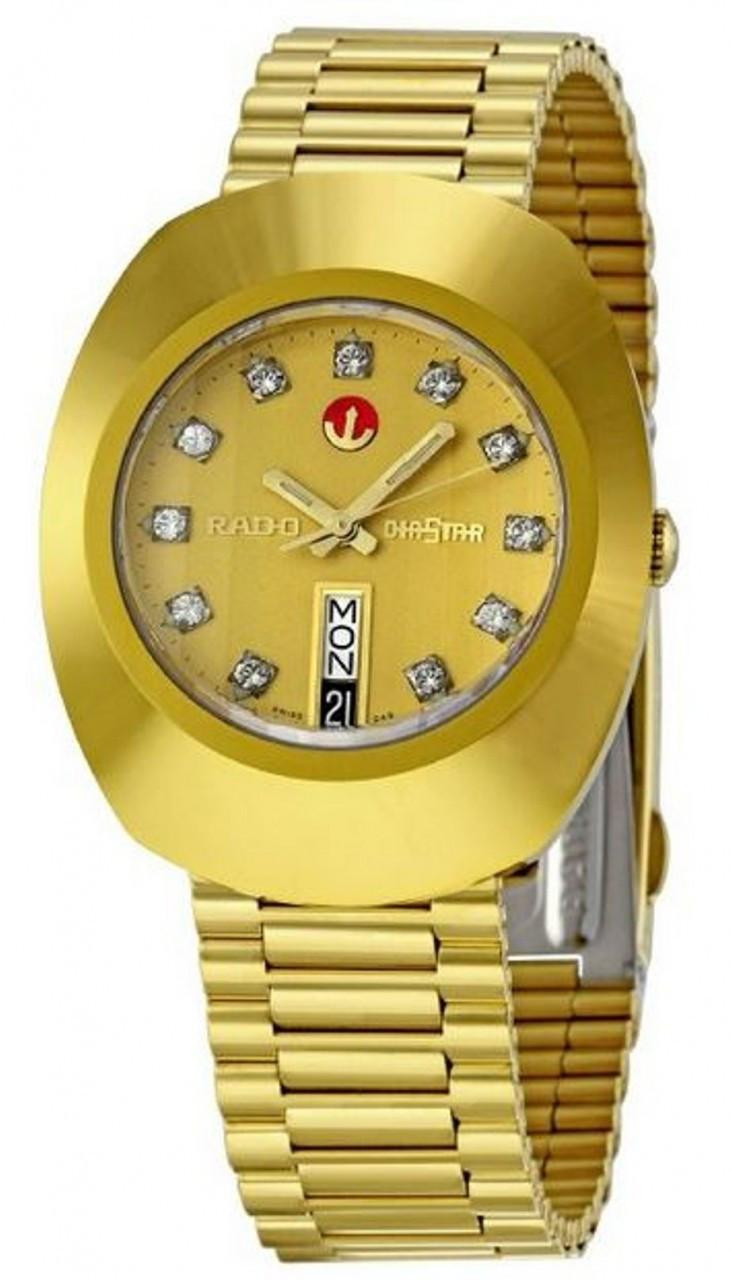
Consider a brand like Rado, which built its reputation on pioneering scratch-resistant high-tech ceramic and sapphire. The tactile quality of these materials is central to the brand's identity, and it's precisely the sort of thing that's difficult and costly to counterfeit convincingly. When you handle an authentic Rado, the finishing and material integrity should feel seamless and deliberate.
Sapphire crystal is another useful checkpoint. Genuine sapphire is extremely hard and resists scratches, and a drop of water placed on its surface will bead up and hold its shape rather than spreading out. Many counterfeits use cheaper mineral or acrylic crystals to save money. Pair that observation with the presence of anti-reflective coating, which gives sapphire a subtle blue or purple tint at certain angles, and you have a quick, non-destructive way to gauge quality.
The Movement: Where Counterfeits Truly Struggle
If there's a single most revealing test, it's the movement. The mechanical heart of a luxury watch is where decades of engineering live, and it's the hardest thing to fake convincingly. Authentic automatic and mechanical watches feature a smooth, sweeping second hand that moves in tiny incremental steps, giving the appearance of gliding. Many low-quality fakes use quartz movements that tick once per second, an immediate giveaway on a watch that should be mechanical.
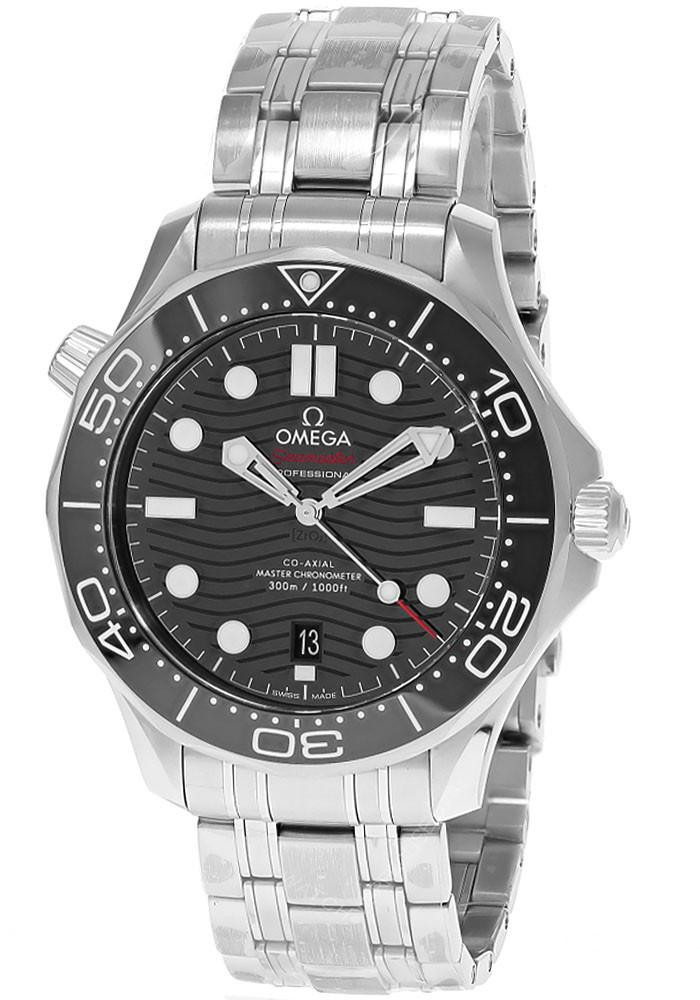
Take Omega as an example. The brand's modern Co-Axial calibers are marvels of engineering, featuring a proprietary escapement and Master Chronometer certification that guarantees resistance to magnetic fields up to 15,000 gauss. Reproducing that kind of movement is essentially impossible for a counterfeiter working on a budget. When you look through the sapphire caseback of a genuine Seamaster, you should see beautifully finished bridges, precise engraving, and a rotor that spins freely and silently.
Of course, not every watch has an exhibition caseback, and you shouldn't be opening cases yourself unless you're trained to do so. But even on closed-case watches, the movement reveals itself through behavior. Listen to the watch in a quiet room. A genuine mechanical movement produces a soft, consistent rhythm, while a cheap fake may sound rattly or uneven. The way the crown winds, the smoothness of setting the time, and the feel of the date change at midnight all offer clues that a trained hand learns to read.
Dials, Text, and the Art of Precision
The dial is a counterfeiter's minefield because it demands microscopic precision. Genuine luxury watches use sophisticated printing and applied elements that produce razor-sharp text with perfectly even spacing. Under magnification, fake dials often reveal blurry printing, uneven fonts, or lume application that bleeds outside its intended borders. Take a loupe to the smallest text on the dial, and you'll frequently find the answer there.
Alignment is another quiet giveaway. On an authentic watch, the date should sit perfectly centered in its window, the indices should be evenly spaced, and any printed sub-dials should line up precisely. Manufacturers like Hamilton, with their rich heritage in American and Swiss watchmaking, take enormous care with dial execution. The Jazzmaster line, for instance, showcases clean, legible layouts where every element is deliberately placed, exactly the kind of attention to detail that mass-produced fakes tend to fumble.
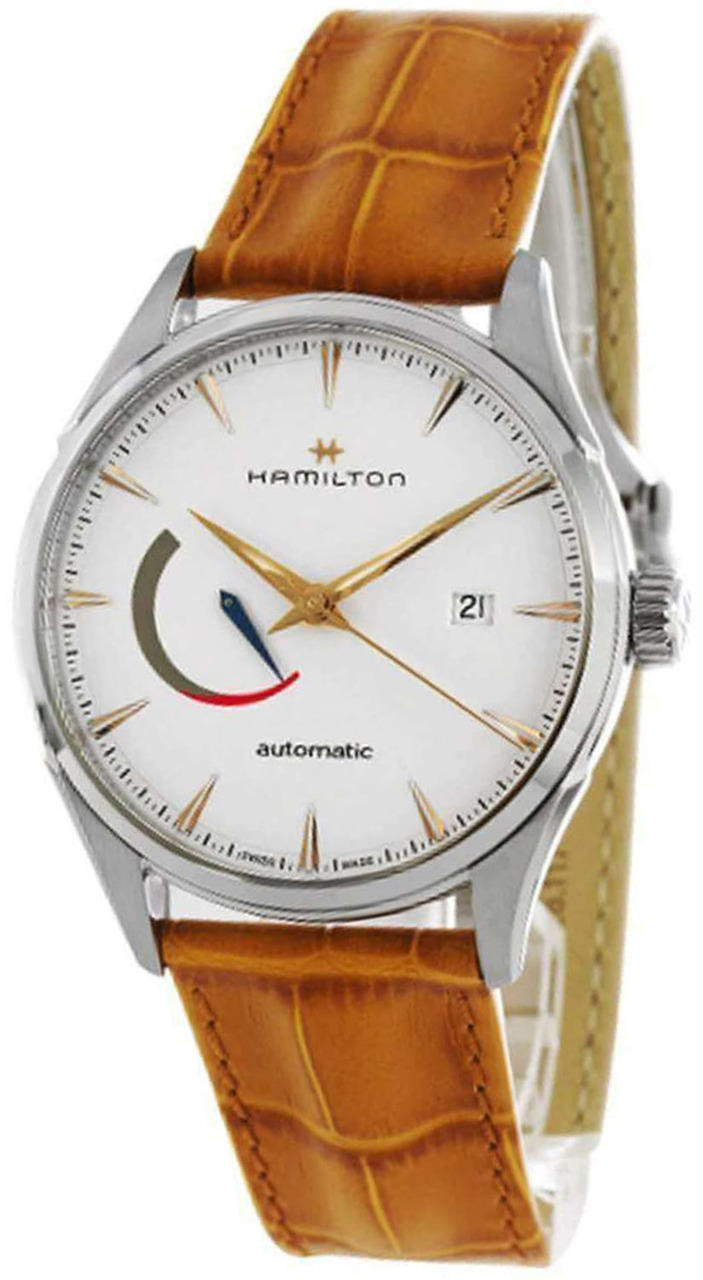
Hamilton watches
HAMILTON Jazzmaster Brown Leather Automatic Men's Watch H32635511
Don't overlook the finishing on the case and bracelet either. Genuine luxury watches feature crisp transitions between brushed and polished surfaces, cleanly cut lugs, and engravings that are deep and precise rather than shallow and mushy. Run your fingernail along an engraved caseback or serial number; on an authentic piece it should feel sharp and defined. Counterfeit engravings, often produced by acid etching or cheap laser work, tend to feel vague and inconsistent.
Serial Numbers, Paperwork, and Provenance
Every genuine luxury watch carries identifying marks, typically a serial number and reference number engraved somewhere on the case, between the lugs, or on the caseback. These numbers correspond to the brand's records, and reputable dealers can often verify them directly with the manufacturer. Be wary of watches where these numbers are missing, poorly stamped, or where the seller becomes evasive when asked about them.
Paperwork matters too, though it's not foolproof. Original boxes, warranty cards, and instruction manuals add confidence and value, but sophisticated counterfeit operations sometimes produce fake documentation to accompany fake watches. This is exactly why provenance, the documented history of where a watch came from, carries so much weight. A watch with a clear chain of ownership from an authorized source is far safer than one with a murky background, no matter how convincing the papers look.
It's worth being honest here about the limits of self-verification. Even with all these techniques, the very best counterfeits, sometimes called "super clones," can be extraordinarily difficult to detect without opening the case or using specialized equipment. This is not meant to discourage you, but to set realistic expectations. Learning the tells makes you a much smarter buyer, yet it doesn't replace the judgment of a trained professional when significant money is involved.
The Simplest Protection: Buy From Trusted Sources
All of this brings us to the most important point of all. The single most effective way to avoid a counterfeit is to buy from an authorized dealer or a reputable seller with a long, verifiable track record. When you purchase from an established source, you're not just buying a watch; you're buying the assurance that comes from an accountable business with a reputation to protect. This is where the authentication burden shifts from your shoulders onto experts who do it every day.
At Watch Warehouse, for example, more than 25 years of experience as an authorized dealer means every timepiece is vetted and backed by genuine accountability. That kind of institutional knowledge is difficult to replicate and impossible to fake, and it's precisely what protects buyers from the risks we've discussed. When authenticity is guaranteed at the source, you can focus on enjoying the watch rather than worrying about it.
Ultimately, learning to spot a fake is about developing an eye for quality and an appreciation for the craftsmanship that makes genuine luxury watches worth owning. The more you understand about how these watches are made, the more obvious the shortcuts of counterfeiters become. Combine that knowledge with the discipline to buy only from trusted sources, and you'll navigate the world of fine watches with confidence, whether you're purchasing your first automatic or adding a grail piece to a growing collection.
Featured Watches to Consider
Here are some examples from the Watch Warehouse collection that illustrate the points discussed above:
Hamilton watches