Posted by Watch Warehouse on Oct 21, 2026
New vs. Pre-Owned Luxury Watches: Which Is Worth Your Money?
If you've spent any time shopping for a luxury watch, you've probably hit this fork in the road: should you buy new, or is pre-owned the smarter move? It's one of the most common questions we hear, and the honest answer is that it depends entirely on who you are, what you value, and what you're trying to accomplish. Both paths have genuine advantages, and neither is universally "better."
The good news is that this decision isn't as complicated as the forums sometimes make it seem. Once you understand what you're actually trading off in each direction, the right choice for your situation tends to become clear. Let's walk through it the way we would if you were standing across the counter from us.
What Are You Really Paying For With a New Watch?
When you buy new, you're paying for more than the watch itself. You're paying for peace of mind. A new timepiece arrives untouched, with full manufacturer warranty coverage, the complete box and papers, and the simple assurance that no one has lived with it before you. For many buyers, that matters enormously—and it's a perfectly rational thing to value.
There's also the experience. Unboxing a brand-new watch, peeling the protective film off the caseback, setting the time for the very first time—these small rituals are part of the joy of ownership. If a watch is marking a milestone like a graduation, promotion, or anniversary, that pristine, first-owner feeling can be worth the premium all on its own.
The tradeoff, of course, is depreciation. Most watches lose a meaningful portion of their value the moment they leave the authorized dealer, much like a new car driving off the lot. A few highly sought-after models buck this trend, but for the vast majority, buying new means accepting that initial drop in value. If you plan to keep the watch for decades and never sell it, that depreciation is largely theoretical. If you like to rotate your collection, it's something to think carefully about.
Why Pre-Owned Can Be the Savvy Buyer's Choice
Here's where pre-owned gets interesting. Because that first wave of depreciation has already happened, buying a gently used watch often means getting substantially more watch for your money. A timepiece that sold for a premium when new might be available in excellent condition for a noticeably friendlier price a few years later—sometimes with the original box and papers still intact.
Pre-owned also opens doors that new simply can't. Discontinued references, limited editions, and vintage pieces are only available on the secondary market. If you've fallen for a specific model that's no longer in production, the pre-owned route isn't just an option—it's the only way to get it. This is especially true for commemorative and limited-run watches tied to a particular athlete, event, or year.
Consider something like the TISSOT T-Race Chrono Stefan Bradl Limited Edition from 2015. A racing-inspired chronograph produced in honor of the MotoGP rider, this is exactly the kind of piece that captures a specific moment in time. You won't find it on a current catalog, but on the pre-owned market a watch like this becomes accessible—often in beautiful shape and at a price that reflects real value for a limited production run.
The catch with pre-owned is that quality varies wildly depending on where you buy. A watch's history isn't always visible on the surface, and the secondary market has its share of pitfalls—refinished dials passed off as original, aftermarket parts, service histories that don't quite add up. This is why the source matters more than almost anything else, a point we'll return to shortly.
How Condition and Service History Change the Equation
When you buy new, condition is a non-issue—everything is pristine by definition. With pre-owned, condition becomes the heart of the matter, and learning to evaluate it is one of the most valuable skills a watch buyer can develop.
Start with the obvious: the case and bracelet. Light surface scratches are normal and usually polish out, but deep gouges, dents, or overly aggressive prior polishing (which rounds off sharp edges and thins the case) are red flags. A watch on a rubber or leather strap, interestingly, often shows its age more gracefully, since the strap can simply be replaced while the case stays protected from bracelet-related wear.
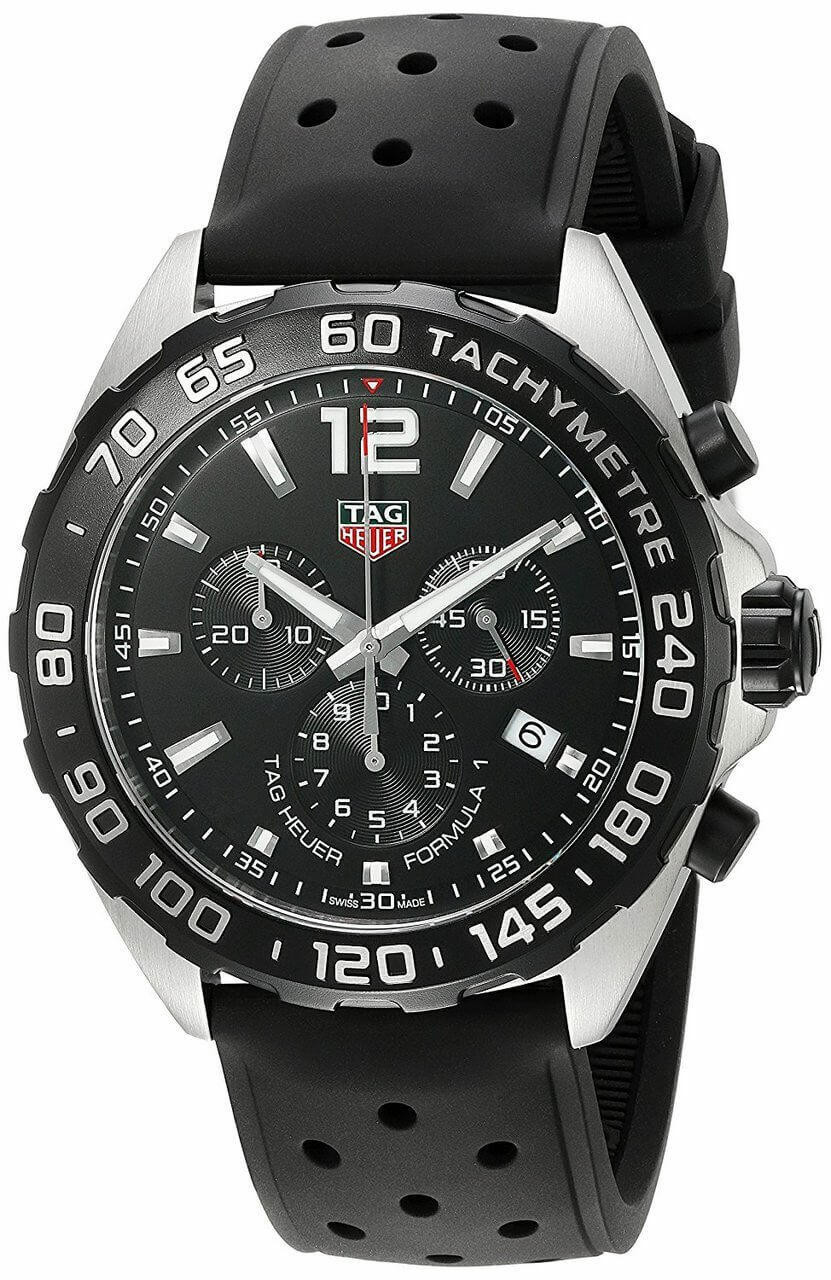
Take a chronograph like the TAG Heuer Formula 1 on a rubber strap. Because the strap is a wear-and-replace component, the real question with a used example is the condition of the case, crystal, and movement—not the strap, which can be swapped for a modest cost. A well-kept example offers all the sporty character and motorsport heritage TAG Heuer is known for, often at a price that makes it an easy entry point into the brand.
TAG Heuer Watches
TAG HEUER Formula-1 Chronograph Rubber Men's Watch CAZ1010.FT8024
Then there's service history. An automatic mechanical watch typically needs a full service every five to seven years to keep running accurately and to prevent wear. A pre-owned watch that has been recently serviced is worth more than one that's overdue, simply because you won't be facing that cost soon. Always ask when the watch was last serviced, and factor a potential service into your budget if the answer is "we're not sure." A reputable seller will be upfront about this rather than leaving you guessing.
Does Resale Value Depend on New or Pre-Owned?
This is where a lot of buyers get tangled up. The reality is that once a watch is a few years old, its value tends to stabilize. That steep initial depreciation has already been absorbed by the first owner, so a well-chosen pre-owned piece can actually hold its value better going forward than a new one will over the same period. In other words, buying pre-owned can mean someone else has already paid the depreciation "tax" for you.
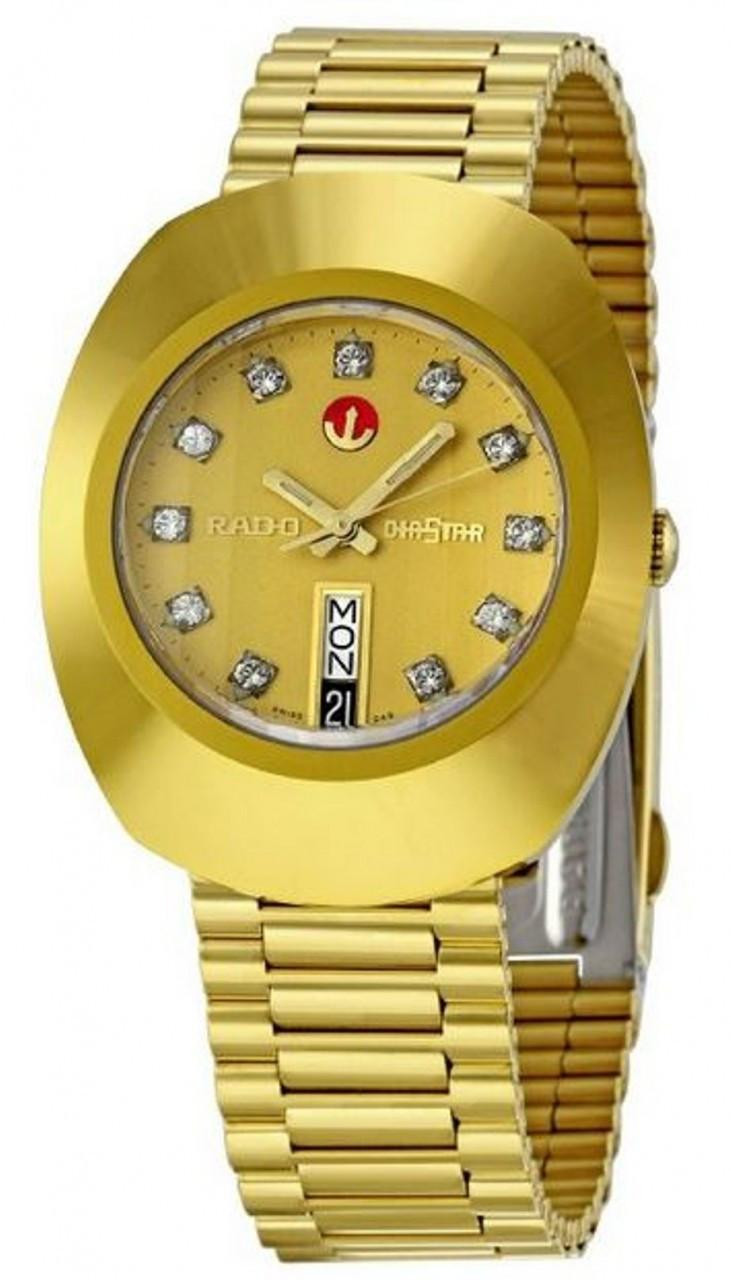
Certain categories tend to retain value particularly well—think classic designs, materials that don't go out of style, and pieces with some element of scarcity. A gold watch with a diamond-set dial, for instance, carries intrinsic material value alongside its design appeal. The RADO Original with its distinctive scratch-resistant case and timeless 35mm proportions is the kind of elegant, understated piece that doesn't chase trends, which tends to help it age gracefully both aesthetically and in value.
That said, don't let resale anxiety drive the entire decision. Unless you're specifically buying as an investment, the primary purpose of a watch is to be worn and enjoyed. The best "resale strategy" for most people is simply to buy a well-made watch they genuinely love from a trustworthy source, at a fair price. If it holds its value, that's a bonus—not the whole point.
Who Should Buy New, and Who Should Buy Pre-Owned?
Let's make this practical. Buying new makes the most sense if you want the current-production model with full factory warranty, if the unboxing experience matters to you, if you're marking a special occasion, or if you simply prefer the certainty of being the first owner. There's nothing wrong with paying for that—it's a legitimate part of what makes watch ownership enjoyable.
Pre-owned makes the most sense if you want maximum value for your money, if you're after a discontinued or limited-edition reference, if you don't mind a watch having a bit of history, or if you'd rather let the first owner absorb the initial depreciation. It's also the natural path for anyone drawn to vintage character and the stories older watches carry with them.
The single most important factor, regardless of which path you choose, is buying from a source you can trust. A great pre-owned watch from a reputable dealer—authenticated, inspected, and properly represented—is a far safer purchase than a "new" watch from an unverified seller offering a deal that seems too good to be true. The seller's reputation and expertise often matter more than the new-versus-used label itself.
The Bottom Line
There's no universal winner in the new-versus-pre-owned debate, and anyone who tells you otherwise is probably selling something. New watches offer pristine condition, full warranties, and the pure joy of being first. Pre-owned watches offer value, access to pieces you can't buy new, and the chance to sidestep that initial depreciation. The right choice comes down to your priorities, your budget, and how you plan to live with the watch.
What stays constant either way is the importance of buying from people who know watches and stand behind what they sell. At Watch Warehouse, we've spent more than 25 years helping buyers navigate exactly this decision, and our view has always been the same: the best watch is the one that fits your life and comes to you honestly represented. Whether that's a crisp new chronograph or a thoughtfully chosen pre-owned classic, take your time, ask questions, and buy the watch you'll genuinely love wearing.
Featured Watches to Consider
Here are some examples from the Watch Warehouse collection that illustrate the points discussed above:
TAG Heuer Watches
TAG HEUER Formula-1 Chronograph Rubber Men's Watch CAZ1010.FT8024
