
Posted by Watch Warehouse on Jul 22, 2026
The Timeless Icons: How Legendary Watch Designs Shaped History

Have you ever wondered why certain watches look instantly familiar, even to people who have never studied horology? A friend glances at your wrist and somehow recognizes the shape of a dive watch, or the clean symmetry of a dress watch, without knowing the brand or the price. That recognition is not an accident. It is the result of decades—sometimes a century or more—of thoughtful design decisions that gradually settled into a shared visual language. Understanding how these iconic watch designs came to be tells us a great deal about the history of the twentieth century, and it also helps us make better choices when we buy a watch of our own.
In this article, I want to walk through some of the most influential and enduring designs in watchmaking, not as a catalog of famous names, but as a story of problems solved and ideas refined. The best watch designs were rarely created to look beautiful for its own sake. They were built to answer real questions: How do you read the time in a cockpit? How do you keep water out at depth? How do you dress for a formal occasion without a pocket watch? The answers to those questions became the classic watch styles we still wear today.
Why Do Some Designs Become Timeless While Others Fade?
The watches we call iconic tend to share a few qualities. First, they were designed for a genuine purpose, which gave them an honesty of form. Second, they were refined slowly rather than reinvented constantly, so the design had time to mature. And third, they struck a balance between distinctiveness and restraint—recognizable, but never gimmicky. A design that shouts for attention often ages poorly, while one that quietly does its job tends to endure.
It also helps to remember that the wristwatch itself is a relatively young idea. For most of its history, the portable timepiece lived in a pocket. Wristwatches became widespread only in the early twentieth century, largely because soldiers and pilots needed to check the time with both hands occupied. That practical origin shaped nearly everything that followed. When you look at a vintage-inspired watch today, you are often looking at a solution to a problem that was solved a hundred years ago and never needed changing.
The Dress Watch: Elegance in Restraint
The dress watch is perhaps the purest expression of the wristwatch as a refined object. Its ancestry runs directly from the pocket watch, and its priorities are legibility, thinness, and understatement. A true dress watch has a clean dial, slim hands, a modest case, and just enough on the face to tell the time and nothing more. The idea is that the watch should slip under a shirt cuff and complement formal clothing rather than compete with it.
What makes this category fascinating is how much discipline it demands from a designer. With so little on the dial, every detail matters—the proportion of the hands, the finish of the case, the typeface of the numerals. Small changes read loudly. The Tissot Le Locle is a wonderful example of this tradition made accessible. Named after the Swiss town where Tissot was founded in 1853, it carries Roman numerals, a guilloché-patterned dial, and a slim automatic movement, offering the classic dress-watch look with real mechanical heritage behind it.
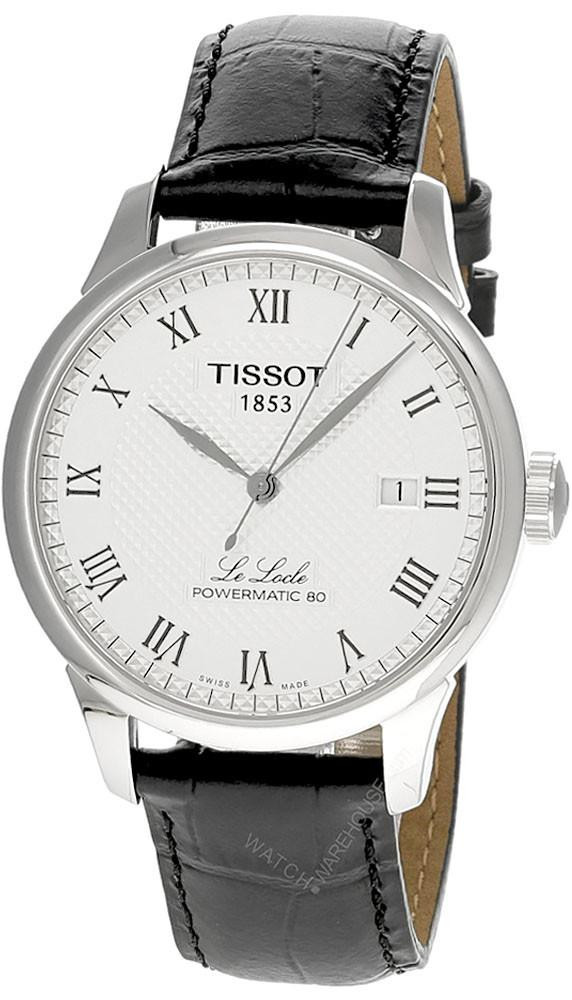
The lesson of the dress watch is that constraint can be a form of luxury. When a design has been stripped to its essentials, quality has nowhere to hide. That is precisely why this style has remained relevant for so long, even as fashion has swung toward larger and sportier watches. There is always a place for a timepiece that knows exactly what it is meant to do.
The Dive Watch: Function That Became Fashion
Few categories illustrate the marriage of purpose and design better than the dive watch. In the 1950s, as recreational and professional diving grew, watchmakers faced a set of very specific engineering challenges. A diver needed to know how long they had been underwater, so the watch required a rotating bezel to track elapsed time. It needed to be readable in murky, dim conditions, so the hands and markers had to be large and coated in luminous material. And of course, it needed to keep water out under real pressure. Every element of the classic dive watch design traces back to one of these needs.
What is remarkable is how thoroughly this tool watch crossed over into everyday life. The dive watch became one of the most versatile designs ever created, comfortable with a suit or a t-shirt, precisely because its functional clarity made it handsome. The Omega Seamaster sits at the heart of this story. Omega's connection to the sea reaches back to the 1930s, and the modern Seamaster combines a robust stainless steel case, a unidirectional bezel, and Omega's respected co-axial movement, along with the kind of water resistance that honors the watch's diving heritage.
It is worth being honest about a tradeoff here. Very few owners of a dive watch will ever take it diving, and that is perfectly fine. The value of the design lies not only in what it can do but in the integrity of how it was built. A watch engineered to survive the ocean will comfortably survive a lifetime of desks, gardens, and airports. When you buy into this category, you are buying decades of proven, purposeful design.
The Pilot's Watch: Clarity Above All
If the dive watch was shaped by the sea, the pilot's watch was shaped by the sky. Early aviation was a dangerous business, and a pilot needed to read the time at a glance while managing an aircraft. That single requirement drove the entire aesthetic: oversized, high-contrast dials, bold numerals, prominent luminous hands, and often a large crown that could be operated while wearing gloves. The pilot's watch is a study in legibility, and its no-nonsense look has an appeal that goes far beyond the cockpit.
Hamilton holds a genuine place in this history. The American brand supplied timepieces to the military and to aviators through the middle of the twentieth century, and its aviation line still reflects that background. The Khaki Aviation Pilot carries a clean, highly legible dial with a practical day-date complication and a dependable automatic movement, capturing the honest, tool-driven spirit that made pilot's watches iconic in the first place.
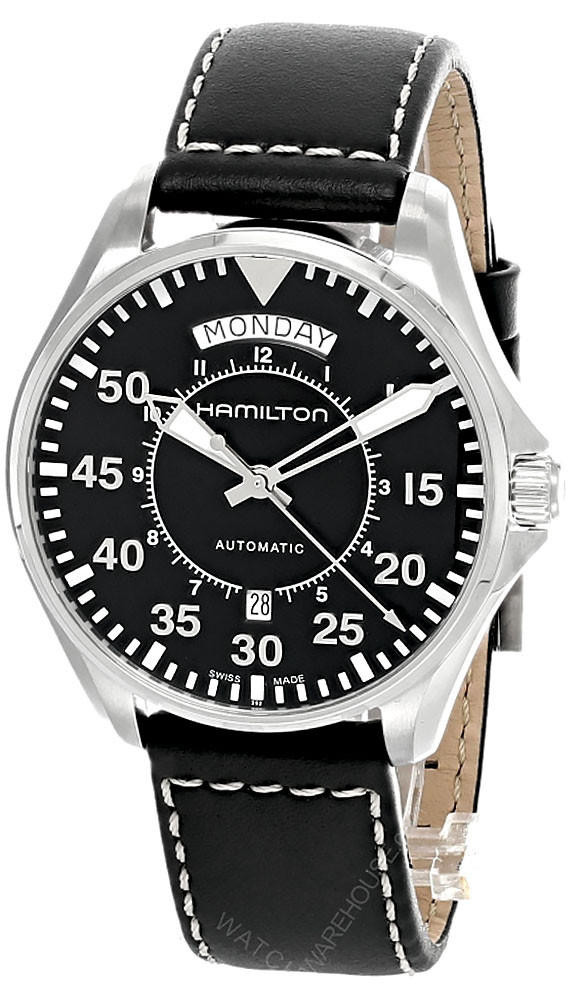
Hamilton watches
HAMILTON Khaki Aviation Pilot 42MM AUTO Day Date Men's Watch H64615735
One thing I appreciate about the pilot's watch is how democratic the category is. Because the design prizes function over ornament, excellent examples exist at nearly every price point. You do not need to spend a fortune to own a watch that carries genuine aviation heritage and delivers outstanding readability. That accessibility is part of why these famous watch designs have such a loyal following.
The Chronograph and the Field Watch: Everyday Icons
Two other designs deserve mention because they quietly shaped how we think about watches. The chronograph—essentially a watch with a built-in stopwatch—emerged from the need to time races, scientific measurements, and eventually space missions. Its layout of sub-dials and pushers has become one of the most recognizable faces in all of watchmaking, and it manages to look purposeful and sporty even on people who never time anything at all.
The field watch, meanwhile, is the humble ancestor of much modern watch design. Born from military specifications, it prioritized durability, legibility, and simplicity above everything. Its influence is everywhere, from affordable everyday watches to high-end interpretations. What both of these styles share with the categories above is a foundation in real use. They earned their looks; they were not styled into existence.
How to Use This History When Choosing a Watch
Understanding where these designs came from is genuinely useful when you are deciding what to buy. Rather than chasing trends, you can ask yourself which tradition speaks to your life. Do you value quiet elegance and formal versatility? A dress watch will serve you for decades. Do you want one robust watch that handles almost anything? A dive watch is hard to beat. Are you drawn to clarity, ruggedness, and a bit of adventurous character? A pilot's or field watch will feel right on your wrist.
The other advantage of buying into an established design is longevity, both mechanical and aesthetic. A watch built on a proven design language is far less likely to look dated in ten years, because it never depended on being fashionable in the first place. That is the practical payoff of history: it filters out the fads and leaves you with shapes that have already stood the test of time. If you would like guidance in exploring any of these styles, the team at Watch Warehouse has spent more than twenty-five years helping people find the right authentic timepiece for their taste and budget.
A Final Thought
The most iconic watches were never designed to be icons. They were designed to solve problems—to survive the deep, to read clearly at altitude, to dress a wrist for a formal evening. Their beauty is a byproduct of purpose, and that is exactly why they have lasted. When you understand the story behind a design, choosing a watch becomes less about status and more about meaning. You are not just picking a style; you are joining a lineage of thoughtful engineering and honest craftsmanship. And whether you gravitate toward the restraint of a dress watch, the confidence of a diver, or the clarity of a pilot's watch, you can wear it knowing that its design has already earned its place in history.
Featured Watches to Consider
Here are some examples from the Watch Warehouse collection that illustrate the points discussed above:
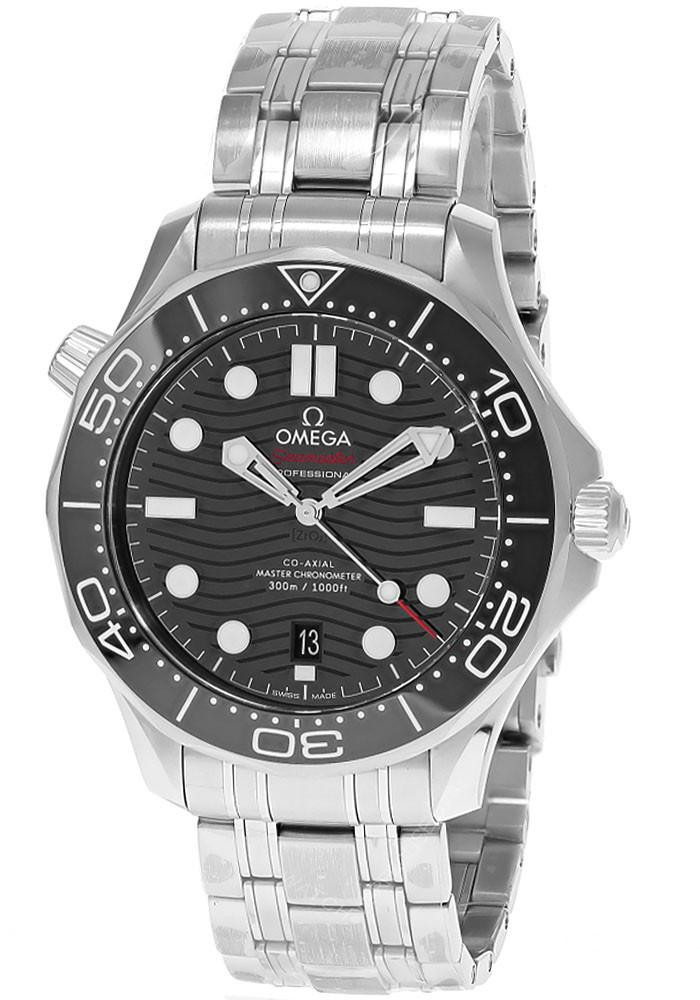
Hamilton watches