Posted by Watch Warehouse on Aug 26, 2026
Understanding Watch Water Resistance: What the Ratings Really Mean
Few specifications on a watch cause as much confusion—and as many ruined movements—as water resistance. You glance at a dial that reads "50M" or "5 ATM" and assume you're cleared for a swim, only to discover later that your beloved timepiece has fogged up from the inside. The truth is that water resistance ratings don't mean quite what they seem to say, and understanding the gap between the printed number and real-world use is one of the most valuable pieces of knowledge any watch owner can have.
So let's clear the water, so to speak. This guide will walk you through what those ratings actually indicate, why they're measured the way they are, and how to make confident decisions about when your watch can get wet and when it should stay firmly on dry land.
What Does ATM Mean on a Watch?
The term ATM stands for "atmospheres," a unit of pressure. One atmosphere equals roughly the air pressure at sea level, and each additional atmosphere corresponds to the pressure exerted by about 10 meters of water depth. So a watch rated at 5 ATM is theoretically able to withstand the static pressure found at 50 meters underwater, while a 10 ATM watch corresponds to 100 meters, and so on.
You'll also see these ratings expressed simply in meters or feet—30M, 50M, 100M, 200M—which are all just different ways of communicating the same laboratory measurement. The key word there is laboratory. These figures come from static pressure tests conducted in controlled conditions, where the watch sits perfectly still in a pressure chamber. They do not account for the dynamic forces created when you dive off a board, swim laps, or even move your arm quickly through water. That distinction is the source of nearly all the confusion around watch water resistance explained poorly by marketing departments.
The Real-World Meaning Behind Each Rating
Because static tests don't reflect actual use, the industry has settled on a practical interpretation that's far more conservative than the printed numbers suggest. A watch rated at 30 meters (3 ATM) is really only splash-resistant. It can survive handwashing, rain, or an accidental sprinkle, but it should never be submerged. Wearing it in the shower or the pool is asking for trouble.
A 50-meter (5 ATM) rating steps things up slightly—light swimming and short periods in shallow water become reasonable, though you'd want to avoid diving or high-impact water activities. Once you reach 100 meters (10 ATM), you're in genuinely swim-friendly territory, suitable for snorkeling and recreational swimming. And at 200 meters (20 ATM) or beyond, you have a watch built for serious water use, including scuba diving.
The reason for this conservative gap is simple physics combined with practical safety margins. Manufacturers know that gaskets age, crowns occasionally get bumped, and temperature changes stress seals. Building in a large buffer between the tested figure and the recommended use protects both the watch and the owner from unpleasant surprises.
Swimming With a Watch: What You Actually Need
If your goal is genuinely swimming with a watch, the practical minimum is a 100-meter rating, and honestly, a dedicated dive watch offers even more peace of mind. Dive watches are engineered to a different standard, often certified under ISO 6425, which requires them to withstand not just pressure but also thermal shock, magnetism, and shock resistance. They also feature screw-down crowns and unidirectional rotating bezels—the latter being a genuine functional tool for timing your air supply underwater.
Consider a piece like the Gucci Dive, which pairs a robust 200-meter water resistance with a proper rotating bezel and a screw-down crown. It's a watch that bridges the gap between serious water capability and everyday style, proving that dive-ready construction doesn't have to look purely utilitarian.

Gucci watches
GUCCI Dive 45MM SS BLK Matte Dial Rotating Bezel Men's Watch YA136208A
One critical habit for anyone swimming with a screw-down crown: always confirm the crown is fully screwed in before entering the water. An unscrewed or partially seated crown is the single most common cause of water intrusion, and it happens far more often than gasket failure. The most water-resistant watch in the world becomes vulnerable the moment its crown is left open.
Why Even Small Watches Can Handle More Than You Think
There's a common assumption that dress watches and smaller timepieces can't tolerate any water at all. While it's true that many elegant watches carry modest 30 or 50-meter ratings, the case construction matters just as much as the number. A well-sealed watch with a properly maintained gasket can be surprisingly capable within its intended limits.
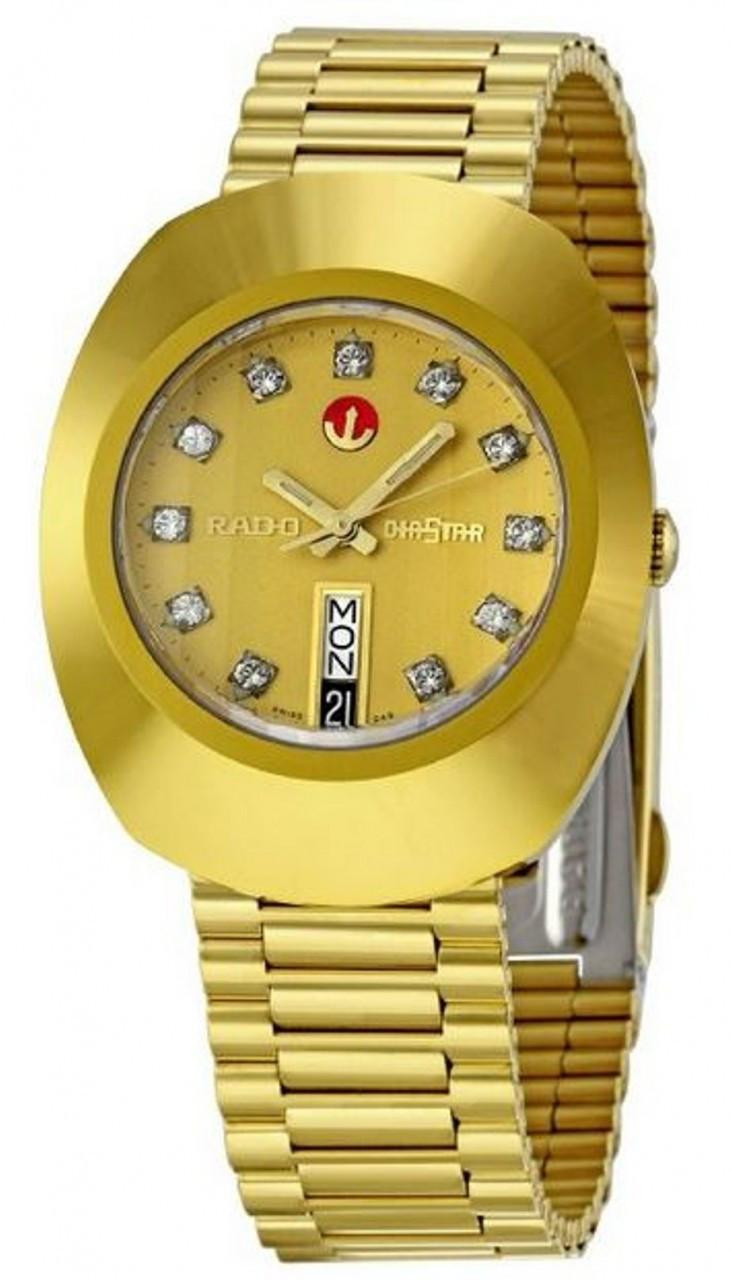
Take the Rado Original, a refined automatic with a 35mm case and diamond-set dial. It carries a practical everyday water resistance that comfortably handles handwashing and incidental moisture, even though it's clearly designed as a sophisticated dress piece rather than a tool watch. It's a good reminder that water resistance exists on a spectrum, and elegance and everyday durability aren't mutually exclusive.
The lesson here is to match the watch to your actual habits rather than an idealized worst-case scenario. If you don't dive and rarely swim in your watch, a 100-meter rating covers virtually everything you'll encounter. There's no need to insist on 300 meters of resistance for a life spent mostly on land.
The Enemies of Water Resistance
Water resistance is not a permanent quality. It degrades over time, and understanding what accelerates that decline helps you protect your investment. The rubber gaskets that seal a watch's crown, caseback, and crystal gradually harden and lose elasticity with age and exposure. This is why watchmakers recommend having water resistance tested and gaskets replaced periodically, typically every couple of years for watches you regularly expose to water.
Heat is a particular enemy. Hot showers, saunas, and hot tubs subject seals to rapid temperature swings that cause the metal case and rubber gaskets to expand and contract at different rates, creating tiny openings for moisture and steam. Steam molecules are small enough to penetrate seals that would easily keep out liquid water, which is why even a highly rated watch can fog up in a hot shower.
Soap, chlorine, and salt water also take their toll. Chemicals can degrade gaskets faster than fresh water, and salt crystals left to dry in seals and crevices can compromise the seal over time. A simple rinse in fresh water after ocean swimming, followed by gentle drying, goes a long way toward preserving both the seals and the case finish.
Choosing a Versatile Everyday Companion
For most people, the ideal solution isn't a specialized dive computer or a delicate dress watch, but something in between—a rugged, reliable timepiece that handles daily life without fuss. Field watches occupy this sweet spot beautifully. Originally designed for military use, they emphasize legibility, toughness, and dependable water resistance suited to real activity.
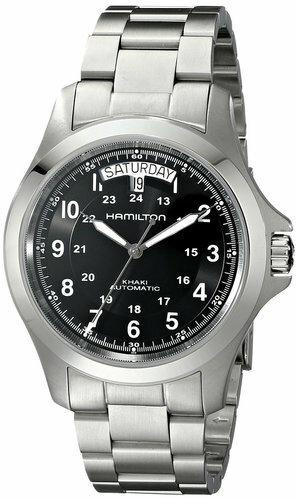
The Hamilton Khaki Field King exemplifies this philosophy. With its automatic movement, robust stainless steel case, and practical water resistance, it's the kind of watch you can wear through a rainstorm, wash your hands in without a second thought, and generally live your life around. It won't replace a dedicated diver, but for someone who values versatility over specialization, it's an outstanding all-around choice.
Practical Advice for Living With Your Watch
Once you understand the ratings, a few simple rules keep you out of trouble. Never operate the crown or pushers while the watch is underwater or even wet—doing so bypasses the seals entirely. Always screw down the crown fully before any water exposure on watches equipped with that feature. Rinse your watch after swimming in chlorinated or salt water, and keep it out of hot showers and saunas regardless of its rating.
Perhaps most importantly, respect the age of your watch. A twenty-year-old watch that once boasted 200 meters of resistance may no longer be reliable underwater if its gaskets have never been serviced. When in doubt, have it pressure-tested before trusting it in water. It's a quick, inexpensive procedure that can save you from a costly repair.
If you're ever uncertain about a specific model's real-world capabilities or when it's due for service, the team at Watch Warehouse has spent decades helping customers understand exactly what their watches can and cannot handle. Drawing on more than 25 years as an authorized dealer, they can offer straightforward guidance tailored to how you actually plan to wear your watch.
Final Thoughts
Water resistance is one of those specifications that rewards a little knowledge with a lot of peace of mind. The printed number is a starting point, not a promise, and the smartest approach is to interpret it conservatively while maintaining your watch properly. Whether you're drawn to a serious diver, an elegant everyday piece, or a rugged field companion, matching the watch to your genuine lifestyle—and respecting its limits—ensures it will serve you faithfully for years to come.
Understand the ratings, mind the crown, service the seals, and your watch will handle the water exactly as it should. That's the whole secret, and now it's yours.
Featured Watches to Consider
Here are some examples from the Watch Warehouse collection that illustrate the points discussed above:
Gucci watches
GUCCI Dive 45MM SS BLK Matte Dial Rotating Bezel Men's Watch YA136208A