Posted by Watch Warehouse on Sep 2, 2026
Why Are Swiss Watches So Special? A Collector's Guide
Have you ever wondered why a small country in the heart of Europe, roughly the size of the American state of South Carolina, has come to dominate the world of fine watchmaking so thoroughly that the phrase "Swiss made" carries almost mythic weight? It's a fair question. When someone spends thousands of dollars on a mechanical watch, they're often paying a significant premium simply because it was assembled and regulated in Switzerland. Understanding what actually justifies that reputation—and what doesn't—can help you become a more thoughtful buyer.
The truth is more nuanced than marketing brochures suggest. Swiss watchmaking is genuinely special, but not for the reasons many people assume. Let's explore what's really behind the legend, so you can decide for yourself what matters when you're choosing a timepiece.
What Does "Swiss Made" Actually Mean?
The phrase "Swiss made" isn't just clever branding—it's a legally protected designation with specific requirements. For a watch to legitimately carry this label, Swiss law mandates that the movement must be Swiss, the movement must be cased up in Switzerland, and the final inspection must take place there as well. As of 2017, the rules tightened further: at least 60% of the manufacturing costs must be generated in Switzerland.
This matters because it prevents companies from slapping "Swiss made" on a watch that was mostly produced elsewhere and merely finished in Geneva. The swiss made watch meaning is fundamentally about traceability and accountability. When you see those two small words on a dial, you're getting a guarantee that a substantial portion of the watch's value—its beating mechanical heart, in particular—was created under a demanding regulatory framework.
That said, "Swiss made" doesn't automatically mean flawless. It's a floor, not a ceiling. There are exceptional Swiss watches and there are ordinary ones, just as there are extraordinary watches made in Germany, Japan, and elsewhere. The label tells you where and how, but it's up to you to evaluate the actual quality of what's in front of you.
Why Are Swiss Watches So Expensive?
Anyone shopping for their first mechanical watch quickly runs into sticker shock. So why are swiss watches expensive compared to a perfectly accurate quartz watch you can buy for a fraction of the cost? The answer comes down to several overlapping factors, and it's worth understanding each one honestly.
First, there's the labor. A mechanical movement can contain well over a hundred tiny components, many of which are finished, assembled, and regulated by skilled hands. Swiss watchmakers undergo years of training, and their expertise commands a premium. Second, there's research and development—the innovation behind new escapements, improved mainsprings, and anti-magnetic technologies costs enormous sums to develop and refine.
Then there's the intangible value: heritage, brand prestige, and the emotional experience of owning something crafted rather than merely manufactured. It would be dishonest to pretend a portion of the price isn't marketing and exclusivity. But a well-made Swiss watch also holds value differently than most consumer goods. A quality timepiece can last generations with proper servicing, which reframes the purchase as an heirloom rather than a disposable gadget.
The Accessible Face of Swiss Watchmaking
Here's something that surprises many newcomers: Swiss watchmaking isn't exclusively the realm of five-figure luxury. Some of the finest introductions to Swiss mechanical craftsmanship come at genuinely approachable prices, and they represent tremendous value for what you receive.
Take Tissot, a brand founded in Le Locle in 1853. Its Le Locle collection honors the very town where the company was born, and models equipped with the Powermatic 80 movement offer something remarkable: roughly 80 hours of power reserve, meaning you can set the watch down on Friday evening and it will still be running Monday morning. That kind of engineering, wrapped in a classically elegant design with Roman numerals and a guilloché dial, would have been unthinkable at this price point a generation ago.
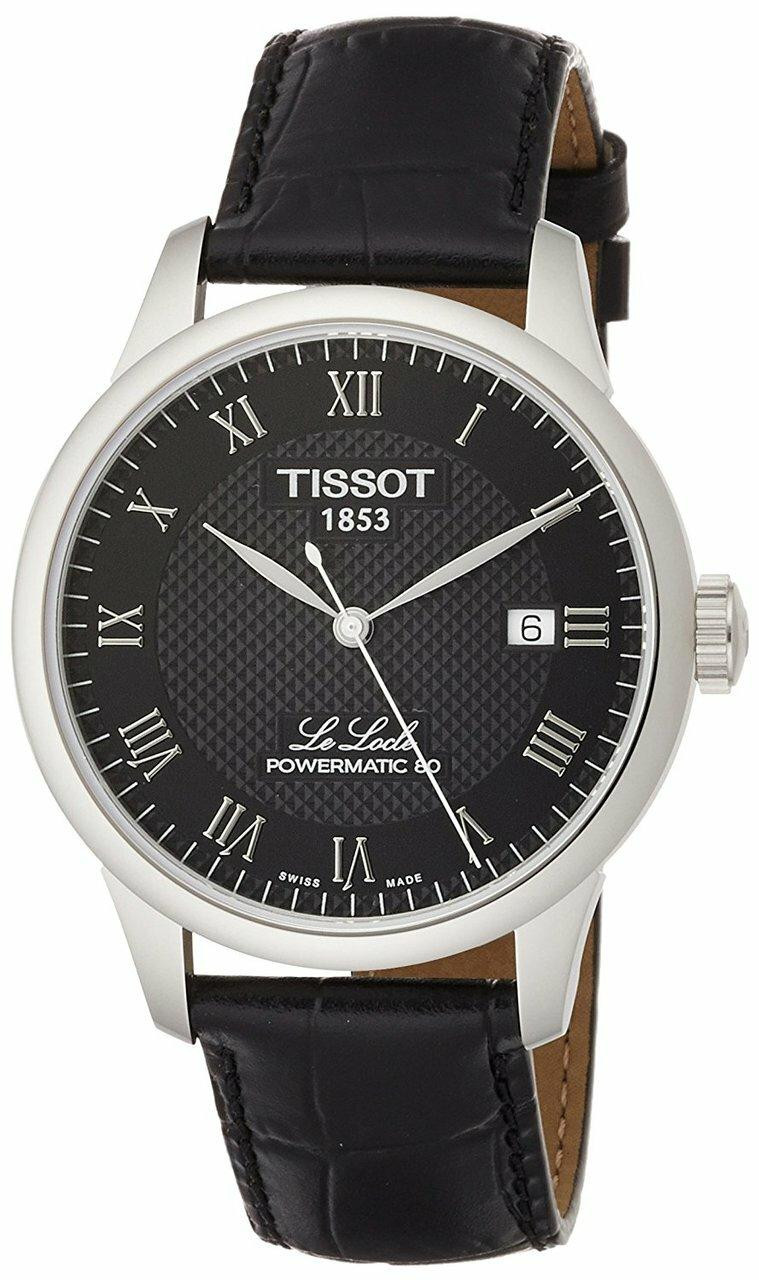
Tissot watches
TISSOT Le Locle Powermatic 80 BLK Dial LTHR Men's Watch T006.407.16.053.00
Hamilton occupies a similarly interesting position. Though the brand has American roots—it was founded in Pennsylvania in 1892—it is now Swiss-based and part of the Swatch Group, benefiting fully from Swiss movement technology. The American Classic Intra-Matic captures a wonderfully clean, mid-century aesthetic with its slim profile and sunray dial. It's a reminder that Swiss watchmaking can express a huge range of design languages, from vintage-inspired dress watches to rugged tool watches.
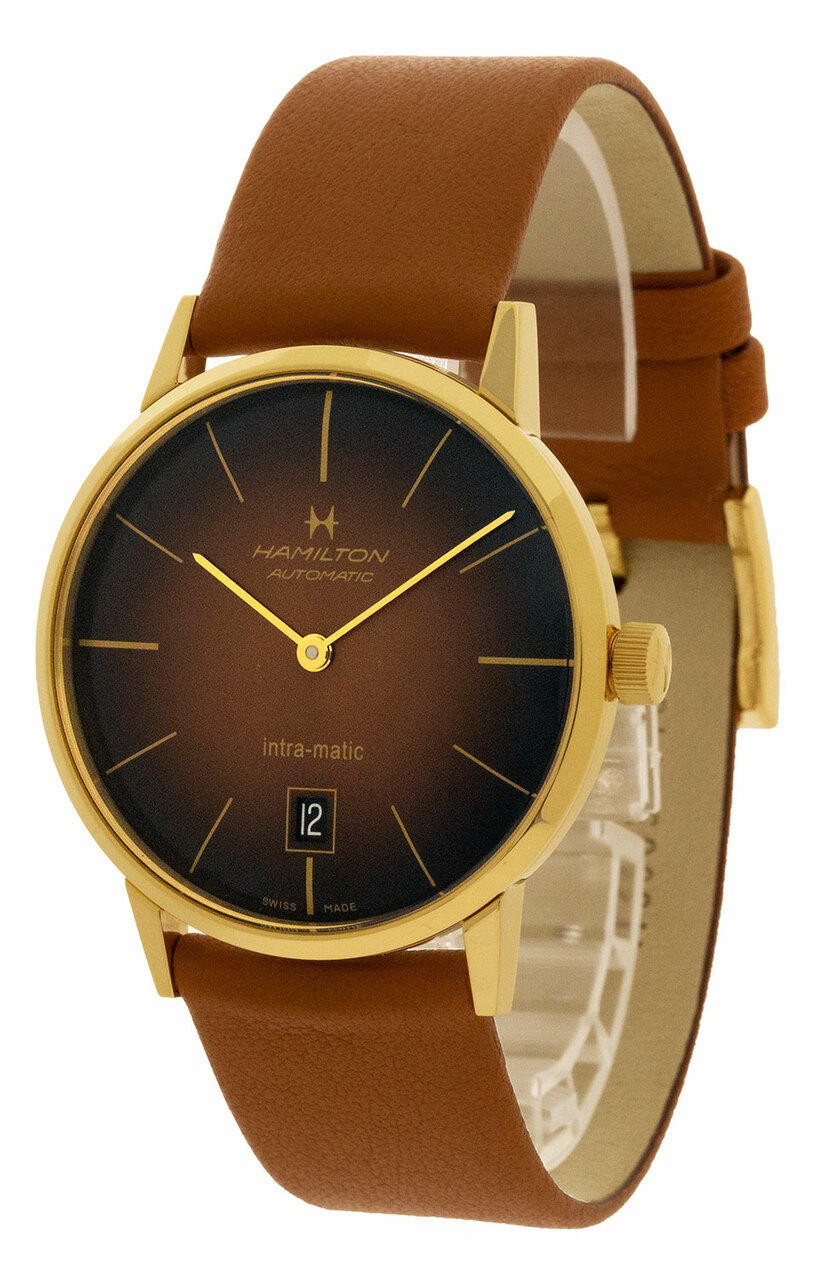
Hamilton watches
HAMILTON American Classic Intra-Matic 38MM Brown Sunray Dial Men's Watch H38475501
What these accessible pieces demonstrate is that the barrier to entering the world of Swiss mechanical watches is far lower than most people imagine. You don't need a luxury budget to appreciate the tactile satisfaction of winding a mechanical movement or watching a sweeping second hand glide smoothly across the dial.
The Heart of the Matter: Swiss Watchmaking Tradition
To understand what makes swiss watchmaking distinct, you have to appreciate its unusual history. When the Protestant Reformation swept through Geneva in the 16th century, ornate jewelry was frowned upon, so skilled goldsmiths and jewelers pivoted toward watchmaking—a craft that combined artistry with utility. Over subsequent centuries, a decentralized network of specialists developed throughout the Jura mountains, with individual craftspeople each perfecting a single component.
This system, known as établissage, created an extraordinary concentration of expertise in a small geographic area. Entire villages became devoted to producing hairsprings, or escapements, or dials. That accumulated knowledge, passed down through generations and continually refined, is genuinely difficult for other regions to replicate quickly. It represents centuries of iterative improvement.
The Swiss also weathered existential threats that forged their resilience. The quartz crisis of the 1970s and 1980s nearly destroyed the industry when inexpensive, ultra-accurate quartz watches from Japan flooded the market. The Swiss response—consolidating brands, embracing quartz where sensible, and repositioning mechanical watches as objects of craft and emotion rather than mere timekeepers—is a big part of why mechanical watchmaking survives and thrives today.
Precision, Certification, and the Pursuit of Excellence
One area where Swiss watchmaking truly distinguishes itself is in the rigorous standards used to certify accuracy and performance. The most famous is COSC certification, awarded to chronometers that pass demanding tests across multiple positions and temperatures. Some manufacturers go even further with their own in-house standards that exceed COSC requirements.
Omega offers a compelling example of this pursuit. The brand's Master Chronometer certification, developed in partnership with the Swiss Federal Institute of Metrology, subjects watches to eight rigorous tests, including resistance to magnetic fields of 15,000 gauss—a level that would stop most conventional mechanical movements dead. The Seamaster, with its rich diving heritage dating back to 1948, embodies this blend of technical achievement and genuine tool-watch capability.
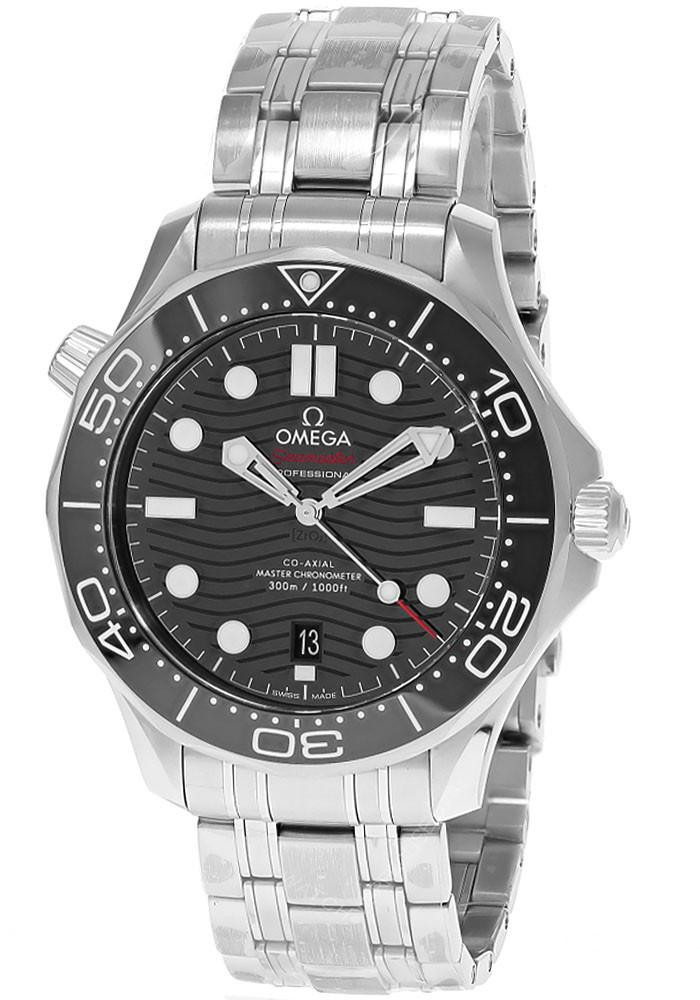
What's worth appreciating here is that these certifications aren't just marketing badges. They represent measurable, tested performance that you can rely on day after day. A Master Chronometer will keep excellent time whether you're sitting at a desk near your laptop or exploring the ocean floor—and that reliability, guaranteed by independent testing, is a large part of what your money buys at this level.
Is a Swiss Watch Right for You?
Let's be honest about the tradeoffs. A mechanical Swiss watch will never be as accurate as an inexpensive quartz piece, and it will require servicing every four to six years, which isn't cheap. If your only goal is knowing the precise time, your smartphone does that better and for free. Buying a Swiss watch only makes sense once you value the craft, the history, and the experience of ownership itself.
The good news is that there's genuinely a Swiss watch for nearly every budget and taste. You might start with an accessible Tissot or Hamilton to discover whether mechanical watches resonate with you, and later graduate to something like an Omega as your appreciation deepens. There's no wrong entry point, and there's no obligation to spend more than feels right for your situation.
My honest advice is to buy the watch that speaks to you, from a source you trust, and to prioritize how a piece feels on your wrist over chasing status or resale figures. If you'd like to explore options across a range of price points, the team at Watch Warehouse has spent more than 25 years helping people find timepieces they'll genuinely enjoy—and as an authorized dealer, they can offer guidance grounded in authenticity and expertise rather than hype.
Ultimately, what makes Swiss watches special isn't any single feature—it's the convergence of centuries of accumulated skill, rigorous standards, thoughtful design, and an unwavering commitment to craft. A Swiss watch is less a tool for telling time than a small, wearable testament to human ingenuity. Whether that resonates with you is a personal question, but now, at least, you understand what you're really paying for.
Featured Watches to Consider
Here are some examples from the Watch Warehouse collection that illustrate the points discussed above:
Hamilton watches
HAMILTON American Classic Intra-Matic 38MM Brown Sunray Dial Men's Watch H38475501
Tissot watches