Posted by Watch Warehouse on Jun 17, 2026
How to Spot a Fake Luxury Watch: An Expert's Guide
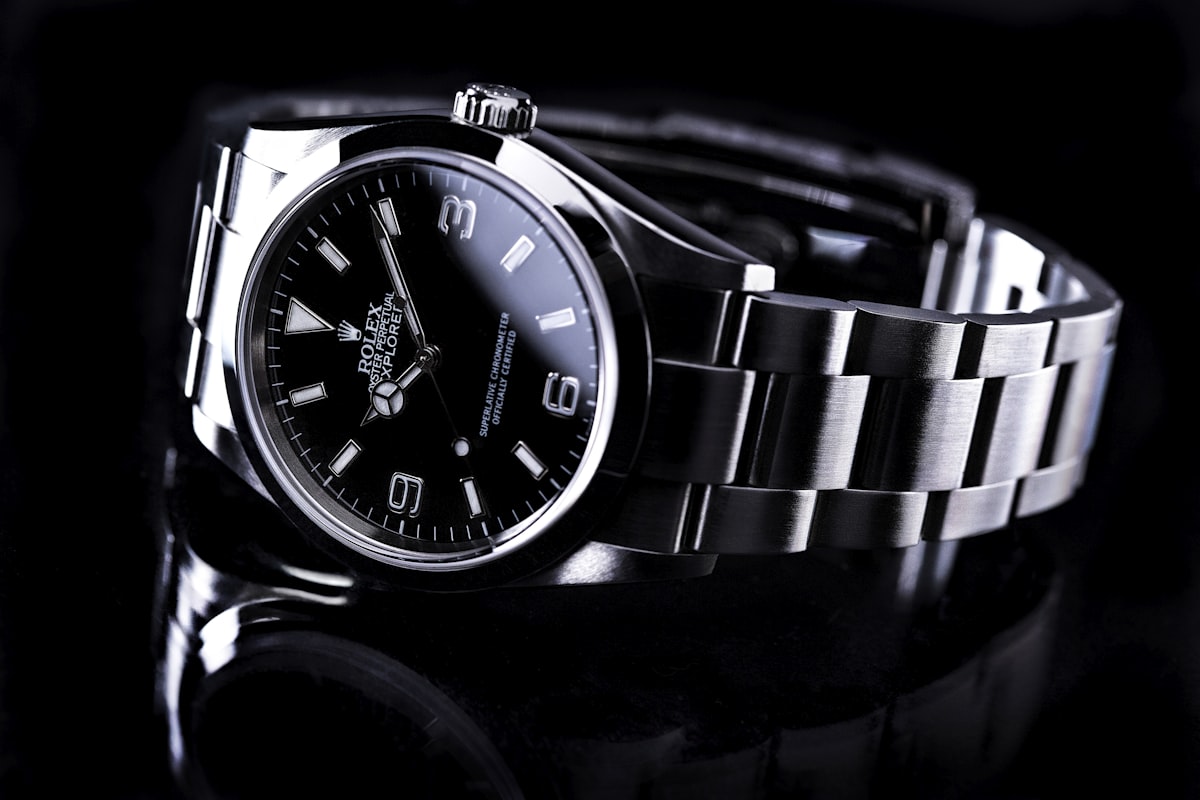
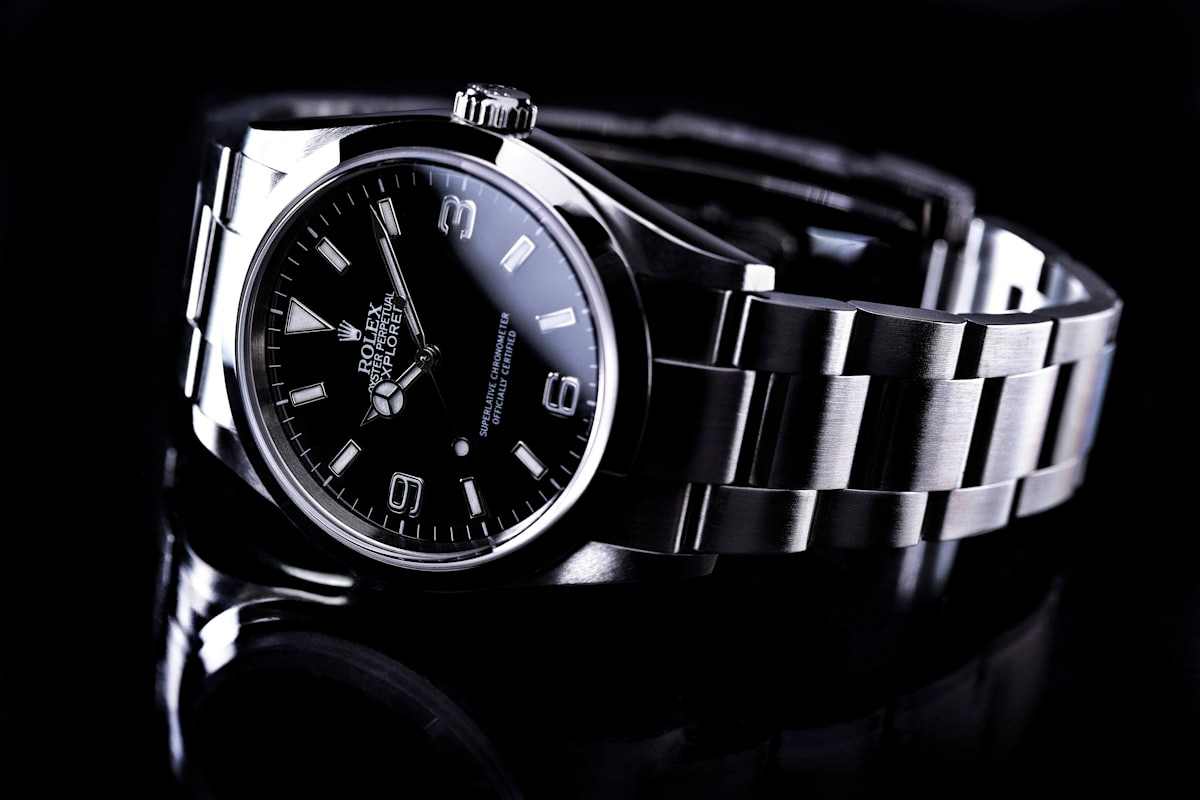
Have you ever held a watch in your hands and felt that tiny flicker of doubt? Maybe the price seemed a little too good, or the seller couldn't quite explain where it came from. That instinct is worth listening to. The counterfeit watch industry has grown remarkably sophisticated over the past two decades, and the days of obvious fakes with misspelled brand names and ticking quartz movements pretending to be Swiss automatics are largely behind us. Today's best counterfeits can fool casual observers, and some can even give experienced collectors pause.
The good news is that authenticity leaves a trail. Genuine luxury watches are the product of precise engineering, careful finishing, and rigorous quality control—and these qualities are extremely difficult to replicate convincingly. Once you understand what to look for and, more importantly, why those details matter, you develop an eye that's hard to fool. This guide walks through the practical methods experts use to separate the authentic from the imitation.
Why Counterfeit Detection Starts Before You Touch the Watch
One of the most overlooked truths about spotting fakes is that the strongest signals often appear before you ever examine the watch itself. Where you're buying matters enormously. A genuine luxury timepiece sold through a legitimate channel comes with a paper trail: original boxes, warranty cards, service history, and a seller who can answer detailed questions without hesitation. Counterfeit sellers, by contrast, tend to be evasive about provenance, push for quick cash transactions, or offer prices that simply don't align with market reality.
Here's a principle worth internalizing: luxury watches hold their value for a reason. When a "Rolex Submariner" or a "Patek Philippe" is offered at a fraction of its known retail or secondary-market price, the discount is almost never a stroke of luck—it's a warning. Authentic watches have well-documented price ranges, and sellers who understand their product price accordingly. If a deal feels like it defies economic logic, that feeling is usually correct.
Before committing to any purchase, research the specific reference number, study what genuine examples look like across multiple trusted sources, and understand the realistic price band. Counterfeiters rely on buyers who are emotional, rushed, or uninformed. Slowing down and doing your homework removes most of their advantage.
The Weight, Feel, and Sound of Authenticity
Luxury watches are built from premium materials—surgical-grade stainless steel, solid gold, sapphire crystal, and precisely machined movements. These materials have a heft and density that cheap alloys and mineral glass cannot mimic. When you hold a genuine timepiece, it feels substantial and balanced in a way that's difficult to describe but immediately noticeable once you've handled enough real examples. Many counterfeits feel surprisingly light or hollow because they cut corners on internal components and case construction.
Listen, too. A genuine mechanical watch with a sweeping second hand should glide smoothly, ticking at a high frequency that produces a near-continuous motion rather than the distinct one-second jumps of a quartz movement. Take the Hamilton Khaki Aviation Pilot Day Date, for instance—a genuine automatic powered by a Swiss movement. Its second hand sweeps fluidly, the crown winds with a precise, resistant feel, and the case carries the weight you'd expect from honest construction. Counterfeits that try to imitate this kind of pilot's watch frequently fail at exactly these points: the sweep stutters, the crown feels gritty or loose, and the overall balance is off.
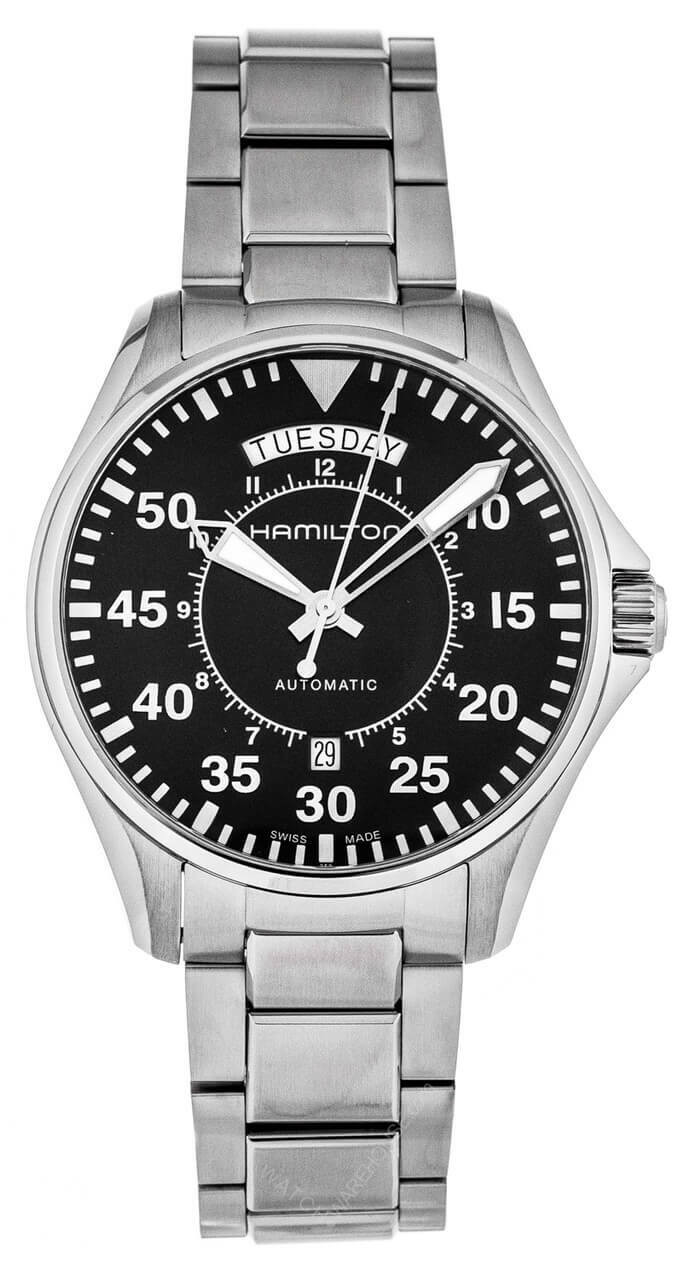
Hamilton watches
HAMILTON Khaki Aviation Pilot Day Date Automatic Men's Watch H64615135
This is also a good moment to mention that authenticity concerns aren't limited to five-figure watches. Counterfeiters target accessible Swiss brands too, precisely because more people buy them. Knowing how a genuine example should feel and sound is your baseline reference, regardless of the price point.
Reading the Dial: Where Counterfeiters Reveal Themselves
The dial is where craftsmanship is most visible, and consequently where fakes most often fall apart under scrutiny. Genuine luxury watches feature crisp, perfectly aligned printing. Text is sharp even under magnification, logos are precisely rendered, and the spacing is consistent. Counterfeit dials, even good ones, tend to show slightly fuzzy printing, uneven alignment, or minor inconsistencies in font weight and letter spacing. A jeweler's loupe—a 10x magnifier—is one of the most valuable tools you can own for this purpose.
Pay close attention to the small details that require genuine manufacturing precision. Applied indices should be cleanly set with no stray adhesive. Lume should be applied evenly. Date windows should frame the date perfectly, with the numeral centered and properly sized. Consider a watch like the Tissot T-Classic Le Locle, known for its elegant guilloché dial and refined Roman numerals. The authentic version displays beautifully clean printing, a perfectly proportioned date window, and that intricate textured dial pattern executed with consistency. Reproductions struggle to match the depth and precision of that guilloché work—it often looks flat, stamped, or slightly blurry by comparison.
Another revealing detail is the crystal. Most luxury watches use sapphire crystal, which is extremely scratch-resistant and often features anti-reflective coating that gives it a slightly blue or remarkably clear appearance. A simple test: a small drop of water on genuine sapphire tends to bead up and hold its shape, whereas it spreads out more on the mineral or acrylic crystals counterfeiters often substitute to save money. Reflections off sapphire are also cleaner and less distorted.
The Caseback, Movement, and Engravings
Turn the watch over and you enter another zone where authenticity becomes apparent. Genuine casebacks feature deep, crisp engravings with consistent depth and clean edges. Counterfeit engravings are frequently shallow, uneven, or slightly off in their lettering. Serial and reference numbers should be precisely executed and, crucially, should match the documentation that accompanies the watch.
If the watch has an exhibition caseback that displays the movement, you have a powerful authentication tool. Genuine movements are finished to a standard that's exceptionally hard to fake—decorated bridges, polished screws, perlage or Côtes de Genève striping, and an engraved rotor. Counterfeit movements visible through a display back are usually crude by comparison, with rough finishing and generic components. Even when a fake uses a closed caseback to hide the movement, the absence of an expected display window on a model known to have one is itself a red flag.
Take a chronograph like the TAG Heuer Formula-1 in stainless steel and ceramic. The genuine article has chronograph pushers that engage with a deliberate, mechanical precision, subdials that are perfectly aligned and functional, and ceramic components with a smooth, dense finish that cheap coatings can't replicate. Counterfeit chronographs frequently have non-functional subdials—they're purely decorative—or pushers that feel mushy and imprecise. The way a complication actually works under your fingers is one of the hardest things for a counterfeiter to fake convincingly.

TAG Heuer Watches
TAG HEUER Formula-1 43MM CHRONO SS Ceramic Men's Watch CAZ1011.BA0843
Bracelets, Clasps, and the Details Most People Ignore
The bracelet and clasp are unsung heroes of authentication because they involve a surprising amount of engineering that counterfeiters often neglect. Genuine bracelets have solid links with tight, even tolerances and minimal play. They feel smooth and substantial as they articulate around the wrist. Counterfeit bracelets tend to feel rattly, hollow, or sharp at the edges, with screws and pins that don't quite line up.
The clasp is especially telling. Authentic clasps engage with a confident, satisfying click and feature clean engravings of the brand name or logo. The micro-adjustment holes, the deployment mechanism, and the finishing on the underside all reflect the same quality standards as the rest of the watch. Counterfeiters frequently underinvest here because they assume buyers won't look closely—which is exactly why you should.
It's also worth examining how everything fits together. On a genuine watch, the bracelet end-links fit the case seamlessly, with no gaps and no misalignment. Lug holes are clean, screws are properly finished, and there are no machining marks or rough edges anywhere. The overall impression of a real luxury watch is one of cohesion: every component was designed to work with every other component, and it shows.
Documentation, Provenance, and the Value of Buying Smart
Even with a sharp eye, the single most reliable protection against counterfeits is buying from a source you can trust. Authentic luxury watches come with verifiable documentation, and reputable sellers stand behind what they sell. Serial numbers should be traceable, warranty cards should match the watch, and the seller should welcome your questions rather than deflect them.
This is where buying from an authorized, established dealer makes a genuine difference. At Watch Warehouse, for example, more than 25 years of experience in the industry means every timepiece passes through hands that know exactly what authenticity looks like—and the documentation and accountability that come with a legitimate purchase remove the guesswork entirely. The peace of mind of knowing your watch is the real thing, backed by a real dealer, is worth a great deal more than the apparent savings of a suspicious bargain.
If you're ever uncertain about a watch you already own or are considering, a professional authentication from a qualified watchmaker or trusted dealer is money well spent. They can open the case, inspect the movement, and confirm details that aren't visible to the naked eye.
Trusting Your Eye and Your Instincts
Spotting a fake luxury watch comes down to a combination of knowledge, attention to detail, and a healthy respect for your own instincts. The weight in your hand, the sweep of the second hand, the crispness of the dial printing, the precision of the engravings, and the integrity of the bracelet all tell a story—and that story is hard to forge convincingly across every single element at once. Counterfeiters may nail one or two details, but rarely all of them.
The deeper truth is that authenticity is the sum of countless small decisions made by skilled people who care about getting things right. That's exactly what you're paying for when you buy a genuine luxury watch, and it's exactly what no counterfeit can
Featured Watches to Consider
Here are some examples from the Watch Warehouse collection that illustrate the points discussed above:
Hamilton watches
HAMILTON Khaki Aviation Pilot Day Date Automatic Men's Watch H64615135

TAG Heuer Watches