Posted by Watch Warehouse on Aug 5, 2026
Watch Sizing Guide: How to Find Your Perfect Wrist Fit
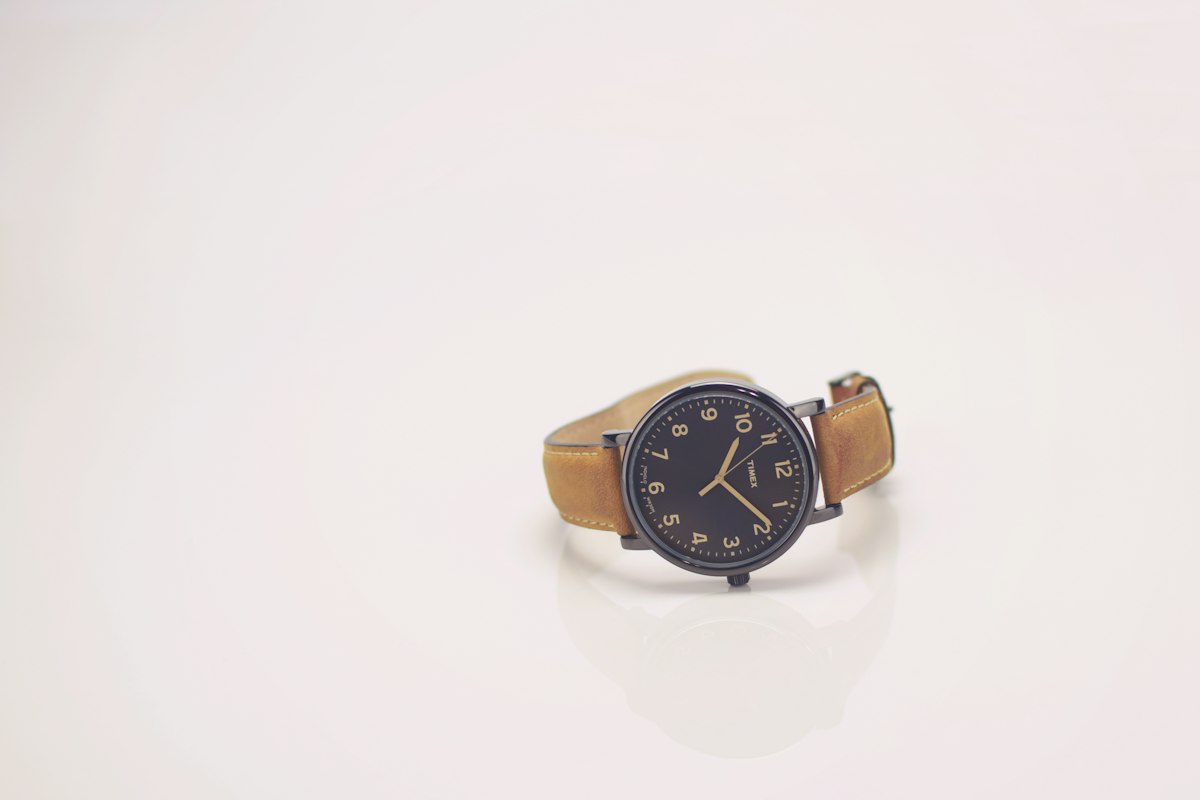
Have you ever slipped on a watch that looked stunning in the display case, only to find it felt like a manhole cover strapped to your wrist? Or the opposite—a beautiful timepiece that all but disappeared, looking more like an afterthought than a statement? If so, you've bumped into one of the most overlooked truths in watch collecting: sizing is everything. A watch can be perfectly engineered, beautifully finished, and historically significant, but if it doesn't sit right on your wrist, none of that matters.
The good news is that finding the right fit isn't guesswork. There's a genuine art to it, but it's an art grounded in a few measurable principles. Once you understand how case size, wrist measurement, and proportion interact, you'll be able to shop with confidence—whether you're browsing online or trying pieces on in person.
Why Does Watch Size Matter So Much?
A watch is one of the few accessories you wear in the same spot every day, often for years. Unlike a jacket or a pair of shoes that you can size up or down at will, a watch case has a fixed diameter. Get it wrong, and you'll feel it constantly—either physically, through discomfort, or visually, every time you glance at your wrist and something feels off.
Beyond comfort, size shapes perception. A well-proportioned watch communicates intention and taste. An oversized watch can read as brash; an undersized one can look uncertain. The sweet spot is when the watch looks like it belongs on your wrist—as if it were made for you. That harmony is what we're really chasing when we talk about a proper watch size guide.
It's worth noting that "correct" sizing is partly objective and partly personal. Trends shift over time. In the early 2000s, 44mm and larger dominated. Today, the pendulum has swung back toward more classical proportions in the 38mm to 40mm range. But the best size for you is ultimately the one that suits your wrist and your eye.
How Do You Measure Your Wrist for a Watch?
Before you fall in love with any particular timepiece, you need to know your wrist size. This is the single most useful number in the entire fitting process, and measuring it takes about thirty seconds.
The simplest method is a flexible tailor's tape measure. Wrap it around your wrist just above the wrist bone—where you'd naturally wear a watch—and note the circumference in millimeters or inches. If you don't have a soft tape, use a strip of paper or a piece of string, mark where it overlaps, then lay it flat against a ruler. That's really all there is to knowing how to measure wrist for watch purposes.
Once you have your number, you can sort yourself into a general category. Wrists measuring around 6 to 6.5 inches (roughly 15 to 16.5 cm) are considered small to average and tend to look best with cases between 34mm and 40mm. Wrists in the 6.5 to 7.5 inch range have the most flexibility, comfortably wearing anything from 39mm to 44mm. Larger wrists above 7.5 inches can carry 44mm and beyond without issue. These are guidelines, not rules—but they're a reliable starting point.
What Do Case Size Numbers Actually Mean?
When you see a watch described as "40mm," that number refers to the diameter of the case, typically measured across the widest point excluding the crown. But case diameter alone doesn't tell the whole story, and this is where many first-time buyers get tripped up.
Two watches with identical 40mm diameters can wear entirely differently depending on their lug-to-lug distance—the measurement from the tip of one lug to the tip of the opposite lug. The lugs are the arms that hold the strap or bracelet. If they're long and extend far past the case, a "small" watch can suddenly feel large and overhang the edges of a narrow wrist. Conversely, short, downturned lugs can make a bigger case wear surprisingly comfortably.
Case thickness matters too. A thin dress watch slides effortlessly under a shirt cuff, while a thick dive watch sits tall and demands more presence. And dial design plays visual tricks: a watch with a wide bezel and small dial opening looks smaller than one with a thin bezel and expansive dial, even at the same diameter. Understanding watch case size means looking past that single headline number.
Finding the Sweet Spot: Versatile Mid-Size Watches
For most people, a case somewhere between 38mm and 42mm represents the versatility sweet spot. This range is large enough to feel substantial and legible, yet restrained enough to slip under a cuff and pair with everything from a suit to a T-shirt. If you're building a collection or buying your first serious watch, this is the territory I'd steer you toward first.
Consider the Hamilton Jazzmaster Inter-Matic at 42mm. It sits at the upper edge of that versatile band, giving it real wrist presence without tipping into oversized territory. The rich brown dial and clean, uncluttered layout keep it elegant, and because Hamilton designs the Jazzmaster with sensibly proportioned lugs, that 42mm case tends to wear true to size rather than sprawling across the wrist. On a 6.75 to 7.5 inch wrist, this is close to ideal.
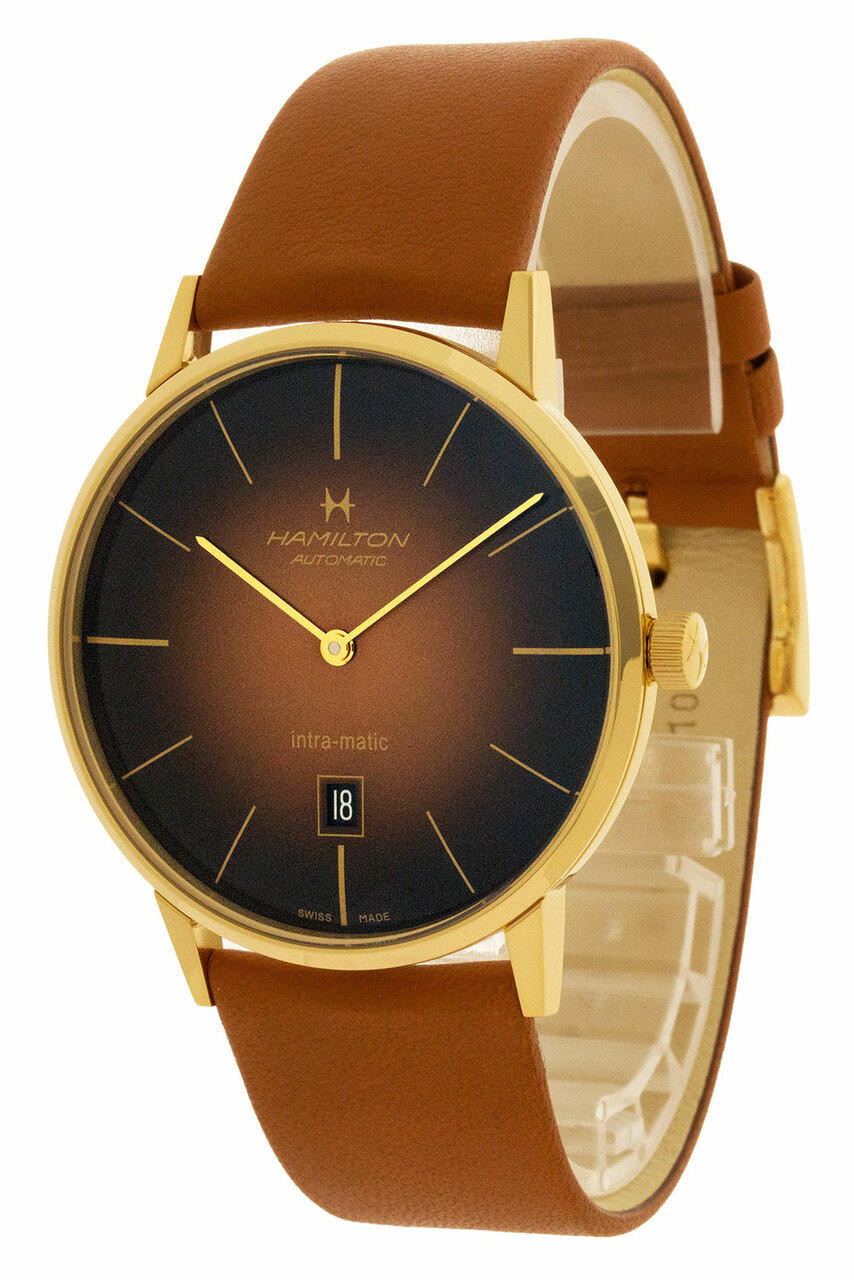
Hamilton watches
HAMILTON Jazzmaster Inter-Matic 42MM Brown Dial Men's Watch H38735501
If you have a smaller wrist and this 42mm feels like a stretch, don't despair—the same design philosophy exists in smaller diameters across many collections. The lesson here is about matching the case to your wrist first, then falling in love with the details second.
When Bigger Makes Sense: Sports and Dive Watches
There's a category of watches where larger sizing is not just acceptable but intentional. Dive watches, in particular, are designed to be legible underwater, robust against pressure, and easy to operate with cold or gloved hands. That functional heritage justifies a bolder case, and a larger diameter can look entirely appropriate here even when the same size might feel excessive in a dress watch.
Take the Gucci Dive at 45mm. On paper, 45mm sounds enormous, and on a small wrist it genuinely would be. But dive watches carry their size differently—the rotating bezel, the matte black dial, and the sporty stance all read as purposeful rather than oversized. On a wrist of 7 inches or larger, a piece like this makes a confident statement without looking clownish. The key is honesty with yourself about whether your wrist can carry it.

Gucci watches
GUCCI Dive 45MM SS BLK Matte Dial Rotating Bezel Men's Watch YA136208A
One practical tip for larger sports watches: pay attention to how the bracelet or strap tapers and how the case back is shaped. A well-designed dive watch with a curved case back will hug the wrist and feel far more comfortable than its dimensions suggest. Always factor in how a watch wears, not just how it measures.
The Case for Classic Proportions
At the other end of the spectrum lies the timeless appeal of the traditional dress watch. For decades, the classic diameter hovered around 34mm to 39mm, and there's real wisdom in that history. Smaller, thinner cases are supremely comfortable, endlessly versatile, and possess a quiet elegance that never goes out of style. If you want a watch you'll still love in twenty years, classical proportions are a safe harbor.
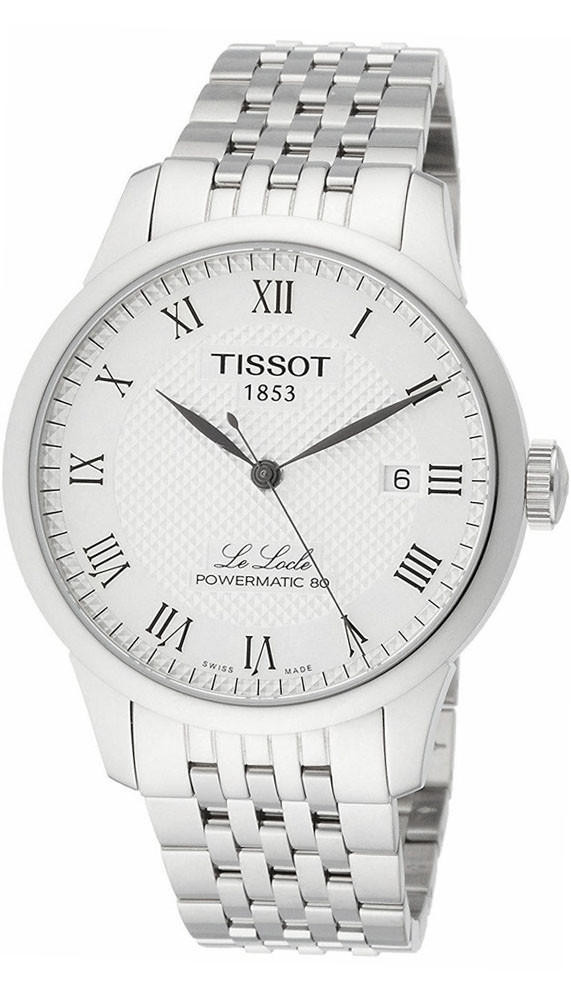
The Tissot Le Locle Powermatic 80 at 39mm is a wonderful example of this philosophy. At 39mm, it lands right at the intersection of classic and contemporary—large enough to satisfy modern tastes, restrained enough to honor tradition. The silver dial with Roman numerals is dressy without being fussy, and the automatic Powermatic 80 movement offers a generous power reserve. It's the kind of watch that suits nearly any wrist and nearly any occasion, which is precisely what makes it such a smart choice for a first automatic.
What I appreciate about classically sized watches is how forgiving they are. A 38mm or 39mm case looks good on a remarkably wide range of wrists, which is why so many enthusiasts eventually gravitate back to this range after experimenting with larger pieces. If you're uncertain about sizing, erring slightly on the smaller side is rarely a mistake.
Practical Tips for Getting the Fit Right
Beyond the numbers, a few practical habits will help you nail the fit every time. First, if you can try a watch on, do it—and wear it for more than a few seconds. Walk around, glance at it in a mirror, see how it looks with your sleeve down. A watch that feels right in the first ten minutes usually feels right for years.
If you're shopping online, use household objects for reference. A U.S. quarter is about 24mm across; lay a few coins side by side to visualize a 40mm or 44mm footprint on your wrist. Better yet, cut a paper circle to the exact case diameter and tape it to your wrist. It sounds low-tech, but it's remarkably effective for previewing how a size will translate.
Finally, don't ignore the strap or bracelet. A thin, tapering strap makes a case feel more delicate, while a broad, heavy bracelet adds visual weight. The right strap can rescue a borderline fit, and swapping straps is one of the easiest ways to fine-tune how a watch wears over time.
The Bottom Line on Finding Your Fit
Watch sizing is where objective measurement meets personal taste. Start by knowing your wrist circumference, understand that case diameter is only part of the story, and give real weight to lug-to-lug distance, thickness, and dial design. From there, let your eye and your comfort guide you. There's no universally "correct" size—only the size that looks and feels right on you.
If you'd like a second opinion, the team at Watch Warehouse has spent more than 25 years helping people find timepieces that fit both their wrists and their lives. Whether you're drawn to the versatility of a 42mm Hamilton, the confident presence of a 45mm dive watch, or the timeless elegance of a 39mm Tissot, the right guidance makes all the difference. Take your time, measure carefully, and trust that the perfect
Featured Watches to Consider
Here are some examples from the Watch Warehouse collection that illustrate the points discussed above:
Hamilton watches
HAMILTON Jazzmaster Inter-Matic 42MM Brown Dial Men's Watch H38735501
Gucci watches